


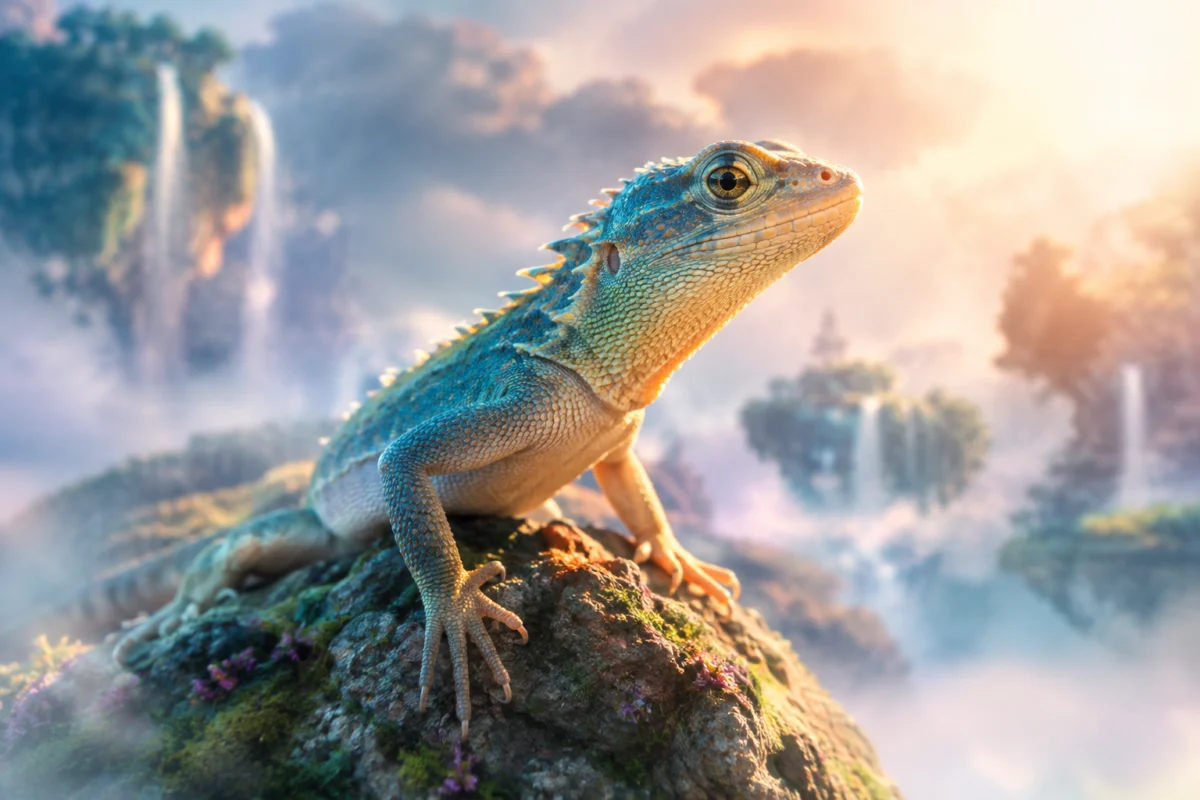
A lizard in a dream may symbolize adaptability, alertness, instinct, or a part of your life that you are observing closely. Because lizards are living animals with varied appearances and behaviors, the dream’s details matter more than a single dictionary definition.
Your feelings, the lizard’s condition, and what it does can change the interpretation. A calm lizard in sunlight may feel very different from one that bites, hides, or appears in an unexpected place.
This symbol is not a prophecy, diagnosis, or fixed message. Use it as a prompt to consider what has been happening in your waking life, while allowing your own associations to guide you.
Lizard Dream Examples
- You see a healthy green lizard resting calmly on a warm rock, and you feel curious rather than afraid.
- A lizard rushes toward you and bites your hand while you try to keep it inside a small box.
- A small lizard stays motionless on a wall. You watch it but cannot tell whether it is sleeping, hiding, or about to move.
- You and a friend notice a lizard crossing a garden path, then discuss whether to leave it alone or help it move.
- You find a lizard in the kitchen of an unfamiliar house and feel unsure whether it belongs there.
- You reach out to catch a lizard, but it slips away under a stone before you can touch it.
Lizard Dream Meaning: Good or Bad?
The lizard’s condition can shape the mood of the dream. A lively, uninjured animal may suggest resourcefulness or a capacity to adjust, while an injured or trapped lizard may bring attention to vulnerability or restricted choices. Neither image proves that something is wrong in your life.
Your agency matters too. Watching, approaching, protecting, chasing, or avoiding the lizard can show how you relate to a situation that feels unfamiliar or instinctive. Notice whether your actions feel deliberate, pressured, or ineffective.
Social context can add another layer. A lizard shared with a friend may raise questions about cooperation or different reactions, while one appearing in a private room may feel more personal. A lizard dream is neither inherently good nor bad; its meaning depends on the animal’s condition, your actions, and the feelings and context of the dream.
Positive Interpretation
In the first example, the healthy lizard rests in sunlight and you feel curious. Because the animal appears at ease and your response is open, the scene may reflect comfort with observation and gradual adjustment. It can invite you to notice a skill or opportunity without rushing to act.
In the garden example, you and your friend discuss what to do. That shared decision may reflect an ability to consider another person’s perspective before responding. If the conversation feels respectful, the dream could highlight cooperation rather than conflict.
In the unfamiliar kitchen, discovering the lizard may lead you to inspect your surroundings. If you respond with interest rather than alarm, the scene can suggest that you are becoming more attentive to a new environment. The dream does not establish that the situation is safe or unsafe; your reaction supplies useful context.
When the lizard escapes beneath a stone, the outcome may feel disappointing, but it can also point to restraint. If you were trying to catch an animal that did not want contact, its escape may represent allowing something to remain beyond your control. That reading fits best if the dream ends with relief or acceptance.
Negative Interpretation
A lizard bite in the second example may express alarm about a boundary being crossed or an interaction turning uncomfortable. The box and your attempt to hold the animal add a sense of pressure. Still, one bite in a dream is not evidence that a real person intends to harm you.
The motionless lizard may leave you uncertain because there is no clear action to interpret. If you feel tense while watching it, the scene can mirror waiting for more information or being unsure how to respond. If the dream gives no strong emotion, the image may simply be ambiguous rather than a sign of concealed danger.
In the unfamiliar kitchen, discomfort may arise because an animal appears in a space where you did not expect it. That mismatch can draw attention to adjustment, privacy, or practical concerns in a new setting. The evidence is limited: an unexpected animal alone does not show that you distrust the people connected with the place.
If the lizard slips away while you try to catch it, frustration may reflect an effort to manage a situation that keeps changing. The interpretation is weaker if you felt no frustration or if the escape seemed ordinary. Consider whether the dream focuses on the chase, the lizard’s movement, or your reaction after it disappears.
Different Cultures, Different Meanings
There is no single meaning of a lizard that applies across cultures, and this symbol does not have one universal interpretation. These are modern symbolic and context notes, not claims about a shared tradition: the animal’s appearance and your personal associations are often more useful than a broad cultural label.
In everyday observation, lizards may be associated with alert movement, camouflage, or living in varied surroundings. If one of these qualities stands out to you, it could shape your reading of the dream. This is a personal association, not a rule about what lizards mean in a particular culture.
Psychological Perspectives
From a symbolic or psychodynamic perspective, the lizard may stand for an instinctive response, a wish to adapt, or something you notice but have not yet approached. A Jungian reading might explore what the animal means to you personally, but no one interpretation is required. Your own memories and associations matter more than a symbol assigned in advance.
From a cognitive and emotional-processing perspective, a dream can combine recent impressions, memories, concerns, and feelings. If you recently saw a lizard, or are adapting to an unfamiliar situation, the image may draw on that material. The setting, mood, and sequence of events can help you connect the dream to waking experience without assuming a hidden message.
Continuity-hypothesis approaches ask how dream content may reflect themes from waking life, while threat-simulation approaches examine how dreams can stage possible dangers or responses. A lizard that bites might fit a threatening scene, but that does not prove that the dream predicts danger. Consider what the dream rehearses, if anything, and whether the same concern appears in your current thoughts or activities.
Lizard Symbol Variations & Context Cues
- Condition: A healthy, active lizard may suggest alertness or adaptability; an injured, dead, or trapped one may bring attention to vulnerability, endings, or limited options. These are possibilities, not fixed meanings.
- Color or material: Note the lizard’s color and whether it looks natural, unusually bright, plastic, or stone-like. A vivid color may be personally noticeable, while a toy or statue changes the image from a living creature to an object.
- Number and scale: One small lizard may feel manageable or easy to overlook. Many lizards, or one unusually large one, may make the subject feel more prominent or difficult to ignore. The emotional effect matters more than the count alone.
- Movement and behavior: Sunning, hiding, biting, shedding, or running away each creates a different scene. Ask what the lizard’s behavior made you do, and whether you felt drawn to approach, protect, or avoid it.
- Hidden, found, or lost: Finding a lizard may make an overlooked detail noticeable; searching for one or losing sight of it may emphasize uncertainty. The dream does not establish that a secret exists.
- Location and social setting: A lizard outdoors, at work, in a bedroom, or in someone else’s home may connect the symbol to different areas of your life. Notice who else is present and whether their response changes yours.
Related Symbols & Common Combinations
- Snake: Compare the lizard’s quick, small-scale movements with a snake’s close contact or winding path; your feelings and the dream’s events should guide the distinction.
- Gecko: A gecko is a type of lizard, so its specific appearance, sounds, or location may make a general lizard dream feel more personal.
- Chameleon: A chameleon may bring attention to changing appearance, blending in, or adapting, especially when color change is central to the dream.
- Crocodile: A crocodile is a larger reptile associated in dreams with a different scale of presence or threat; compare its size, behavior, and distance from you.
What You Should Do If You Dream About Lizard
Start with the lizard’s condition. Write down whether it seemed healthy, injured, still, or active, and describe only what you actually saw. Then note the feeling this detail brought up, such as curiosity, concern, or indifference.
Record its color and appearance without assuming that a color has a universal meaning. If it looked unusually bright, artificial, or familiar, ask what that feature reminds you of. Personal associations can be more informative than a general color dictionary.
Notice how many lizards appeared and how large they seemed. Consider whether the number or scale made the scene feel more important, crowded, or manageable. Avoid treating a count or size as a forecast of events.
Describe your interaction with the animal. Did you watch it, touch it, chase it, protect it, or move away? The action can help you identify whether the dream centers on curiosity, control, caution, or an attempt to respond to something changing.
Finally, note where the dream happened and who was there. Ask whether that place or social situation connects with a current experience, then keep the connection tentative. You do not need to act on the dream; reflection is enough if it helps you understand what feels important to you.
Lizard Vs Similar Dreams
| Aspect | Lizard | Snake | Gecko | Chameleon |
|---|---|---|---|---|
| Occasion/Age or Context | May appear in ordinary outdoor or indoor scenes; context and reaction shape meaning. | May appear in scenes focused on closeness, movement, or a strong emotional response. | May appear as a familiar, specific kind of lizard, with personal associations attached. | May be especially noticeable when its color or changing appearance is central. |
| Core Theme | Possible alertness, adaptation, or instinct. | Possible change, caution, or an instinctive response, depending on the dream. | Often best read through its behavior and the dreamer’s own associations. | Possible adjustment, visibility, or blending in, if those themes fit the scene. |
| Typical Emotions | Curiosity, unease, surprise, or calm. | Fear, interest, caution, or fascination. | Amusement, familiarity, surprise, or unease. | Curiosity, uncertainty, or attention to appearance. |
| Common Symbols | Sunlight, stone, quick movement, hiding, or an unfamiliar room. | Path, grass, water, a bite, or close contact. | Wall, ceiling, small movement, or a distinctive call. | Color change, branches, camouflage, or shifting surroundings. |
More in this category: Animals dreams.
Sources & Further Reading
- NINDS Brain Basics: Understanding Sleep Sleep science
- APA Dictionary of Psychology: Dream Analysis Psychology reference
- Dreaming and the Brain: From Phenomenology to Neurophysiology Research
- Sleep and Dreaming Are for Important Matters Research
- Sleep Foundation: Dreams Editorial background
- Sleep Health Foundation: Dreaming Sleep science