

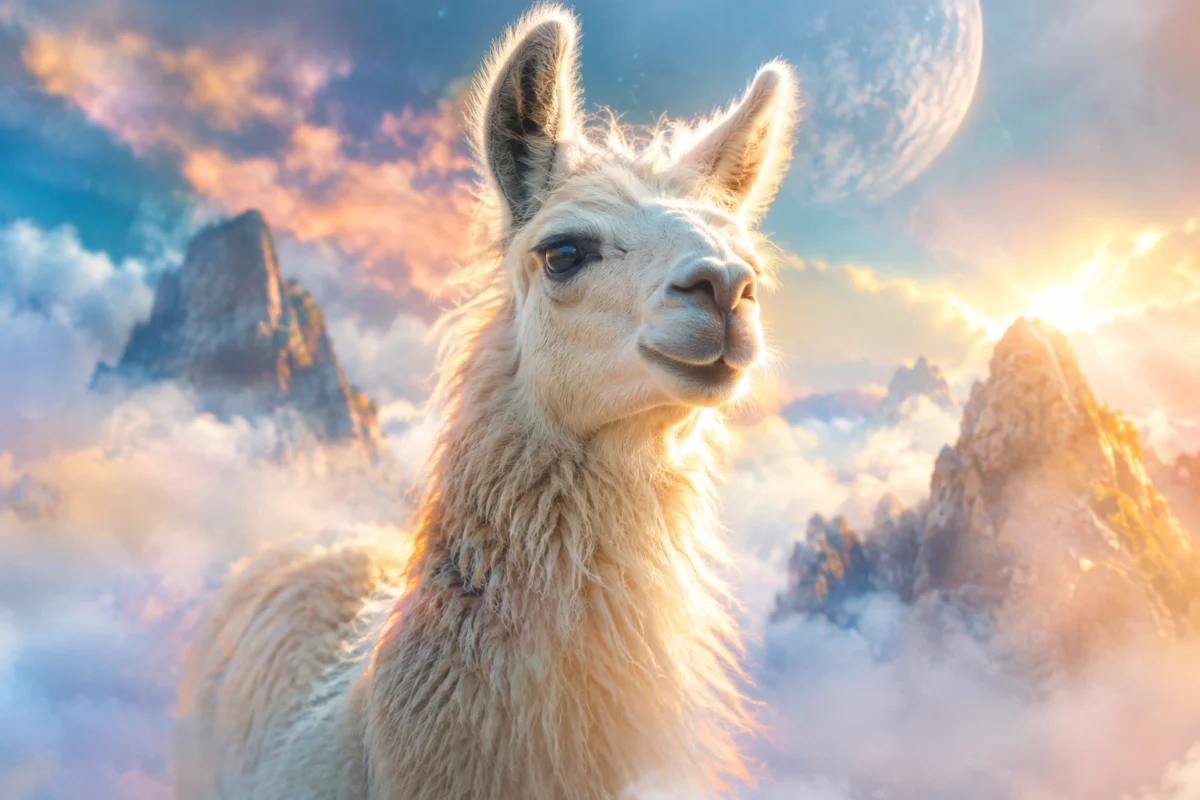
A llama in a dream may symbolize patience, self-reliance, personal boundaries, or the way you carry a responsibility. Its meaning can change with the animal’s condition, actions, and surroundings.
Notice how you felt near the llama and whether you approached it, avoided it, or worked with it. Those details can help connect the dream to a current concern or a familiar part of your life.
A llama dream is a symbol to explore, not a prophecy, diagnosis, or fixed message. Your own associations and the full dream context matter more than any single standard meaning.
Llama Dream Examples
- You walk beside a calm llama on a sunny path, and it keeps an easy pace. This may reflect steady progress or comfort with a responsibility you can manage.
- You find a thin, injured llama alone in a field and feel worried. The scene may connect with concern about something neglected, though it does not prove that a real person or situation is in danger.
- A llama stands behind a fence and watches you without moving. If you feel uncertain, the dream may reflect distance, caution, or a situation you have not yet decided how to approach.
- You try to load a llama’s pack, but it steps closer and waits patiently. This interaction may bring up cooperation, trust, or the balance between accepting help and carrying your share.
- You see a llama on a crowded city street, far from a familiar rural setting. The unusual location may point to a feeling of being out of place or to a surprising detail that has stayed with you.
- A llama runs away as you call it, and you cannot catch up. The action may connect with a goal, responsibility, or sense of control that feels difficult to hold on to.
Llama Dream Meaning: Good or Bad?
The llama’s condition can shape the mood. A healthy, calm animal may suggest steadiness or manageable effort, while a frightened, sick, or injured one may reflect worry, strain, or the sense that something needs attention. These are possibilities, not conclusions.
Your agency matters too. Choosing to approach, guide, feed, or release the llama can feel different from being chased, blocked, or ignored by it. Look at whether your actions changed the scene and whether you felt capable of responding.
Social context also counts. A llama working alongside you may suggest cooperation, while one that stands apart may fit a dream about distance or self-reliance. Overall, a llama dream is neither inherently good nor bad; its meaning depends on the animal’s condition, your choices, and the feeling of the scene.
Positive Interpretation
In the example of walking beside a calm llama, its steady pace may mirror a task that is moving forward without a crisis. Because you keep pace together, the dream can suggest that patience and consistency are helping you handle the work in front of you.
When you try to load a pack and the llama waits patiently, the exchange may make cooperation feel possible. If you feel respected rather than pressured, the scene can reflect a useful balance: you have responsibilities, but you do not have to treat every task as a solitary effort.
A llama on a sunny, open path can also make the surroundings part of a positive reading. If the path is clear and you feel at ease, the dream may connect with confidence in your direction. The open setting does not promise success; it simply gives your movement a more settled tone.
If you help a llama through a difficult moment and it later walks beside you, the change in the scene may matter more than the animal alone. Your care leads to renewed cooperation within the dream, which can point to your sense that practical attention can improve a situation.
Negative Interpretation
An injured, isolated llama may bring worry into the dream. You might associate it with a neglected task, an exhausted resource, or concern about someone or something that depends on care. The image alone is weak evidence for any real-world problem, so treat it as a prompt to consider what the scene brought to mind.
A llama that refuses a pack or moves away when you approach can make cooperation feel strained. If you feel frustrated, the dream may echo a situation in which you are asking too much of yourself or another person. If the animal seems calm, however, the scene may simply show a boundary rather than a conflict.
In the example where a llama watches from behind a fence, the barrier may suggest distance or hesitation. That reading fits best if you wanted to get closer but felt unable to do so. If you felt safe or content, the fence may instead represent a comfortable limit.
A llama that runs away can make you feel powerless or behind. This may reflect a current concern about losing track of a plan, but one chase scene is not enough to establish that meaning. The dream’s ending and your feelings after waking can help you judge whether the action felt frightening, frustrating, or even freeing.
Different Cultures, Different Meanings
There is no single stable traditional dream meaning for a llama that can be applied to everyone. Rather than inventing folklore, it is more careful to treat this article’s readings as modern symbolic and personal-context notes.
In a personal or practical context, a llama may remind you of an animal you have seen, a trip, a book, or a conversation about animals and their care. If you have direct experience with llamas or a particular association with them, that connection may matter more than a general interpretation.
Psychological Perspectives
A symbolic or psychodynamic reading treats the llama as an image that may represent something in your inner life, such as independence, patience, or a boundary. The image does not have one universal meaning. Your feelings toward the animal and the details of its behavior are more useful than assigning it a fixed meaning in advance.
From a cognitive and emotional-processing perspective, dreams can combine recent experiences, memories, and feelings in unusual scenes. A llama may appear because you encountered one or something related to it, or because its qualities fit the mood of the dream. Consider what was on your mind recently without assuming the dream has uncovered a hidden fact.
Continuity-hypothesis approaches look at how dream content may relate to waking concerns, while threat-simulation accounts consider how some dreams rehearse responses to danger or difficulty. These are ways of thinking about dreams, not tools for decoding a symbol with certainty. A fleeing or injured llama could echo worry, but it cannot diagnose a problem or predict an event.
Llama Symbol Variations & Context Cues
- Condition: A healthy, relaxed llama may suit a feeling of steadiness; a dirty, injured, or exhausted one may fit worry or strain. Ask what, if anything, seemed to need attention.
- Color or material: Note the llama’s color, any unusual markings, and whether it seemed real, toy-like, or made of another material. These details may connect with personal memories or affect the dream’s mood, but color has no fixed meaning here.
- Number or scale: One llama may make the scene feel personal, while a herd may draw attention to a group or several responsibilities. A tiny or oversized llama may make the symbol feel less ordinary or more important to you.
- Movement or behavior: Walking calmly, carrying a load, spitting, staring, or running away each creates a different interaction. Focus on what the behavior made you do and feel, not on assuming it has one standard meaning.
- Hidden, found, or lost: Finding a llama may make discovery or care relevant; losing one may bring up separation or uncertainty. If it is hidden, consider whether the dream made you curious, anxious, or relieved.
- Location or social setting: A field, mountain path, home, or crowded street changes the scene’s tone. Note who else is present and whether the llama belongs there, since setting can reflect familiarity, pressure, or a sense of being out of place.
Related Symbols & Common Combinations
- Alpaca: An alpaca may invite comparison with a smaller, familiar herd animal. Your own associations and the interaction in the dream still guide the interpretation.
- Camel: A camel may connect with travel, endurance, or carrying supplies in a dream. Compare what each animal carries and how you feel about the journey.
- Sheep: Sheep may bring group behavior, care, or following a crowd into focus. A llama beside sheep can make independence and belonging useful themes to compare.
- Pack: A pack or bundle can make the llama’s load central, drawing attention to what you carry, accept, or choose to put down.
What You Should Do If You Dream About Llama
Start with the llama’s condition. Write down whether it seemed healthy, tired, frightened, or injured, and note what you felt in response. Ask whether the dream’s concern reminds you of a real responsibility, without treating the image as proof that something is wrong.
Record the animal’s color, markings, and appearance. If it looked ordinary, toy-like, or unusually large, note what those details mean to you personally. A familiar color or object may bring back a memory; it does not need to carry a universal symbolic message.
Count how many llamas appeared and compare their size with the other things in the dream. One animal, a herd, or a very small or large figure may change what held your attention. Consider whether you were focused on one relationship, several tasks, or simply the strange scale of the scene.
Review the interaction: did you guide, help, feed, follow, avoid, or chase the llama? Note whether your choices changed anything. This can help you reflect on how much agency or cooperation the dream seemed to offer, without turning the answer into a judgment about yourself.
Finally, write down where the dream happened and who was there. A quiet field may feel different from a crowded street or an unfamiliar room. Use the setting and social details to form a possible connection to your current life, then keep that interpretation open if the evidence is limited.
Llama Vs Similar Dreams
| Aspect | Llama | Alpaca | Camel | Sheep |
|---|---|---|---|---|
| Occasion/Age or Context | May appear in a dream about carrying a task, boundaries, or cooperation. | May connect with personal memories or a calm herd setting. | May appear in a scene about travel, supplies, or a long effort. | May appear in a group scene involving care or belonging. |
| Core Theme | Self-reliance, patience, or a responsibility, depending on context. | Personal association, gentleness, or group life, depending on context. | Endurance or the demands of a journey, depending on context. | Group behavior, care, or following others, depending on context. |
| Typical Emotions | Steadiness, curiosity, frustration, or worry. | Comfort, curiosity, or uncertainty. | Determination, fatigue, or anticipation. | Belonging, concern, or unease. |
| Common Symbols | Pack, path, herd, fence, or open field. | Herd, wool, pasture, or enclosure. | Desert, journey, water, or load. | Flock, pasture, shepherd, or gate. |
More in this category: Animals dreams.
Sources & Further Reading
- NINDS Brain Basics: Understanding Sleep Sleep science
- APA Dictionary of Psychology: Dream Analysis Psychology reference
- Dreaming and the Brain: From Phenomenology to Neurophysiology Research
- Sleep and Dreaming Are for Important Matters Research
- Sleep Foundation: Dreams Editorial background
- Sleep Health Foundation: Dreaming Sleep science