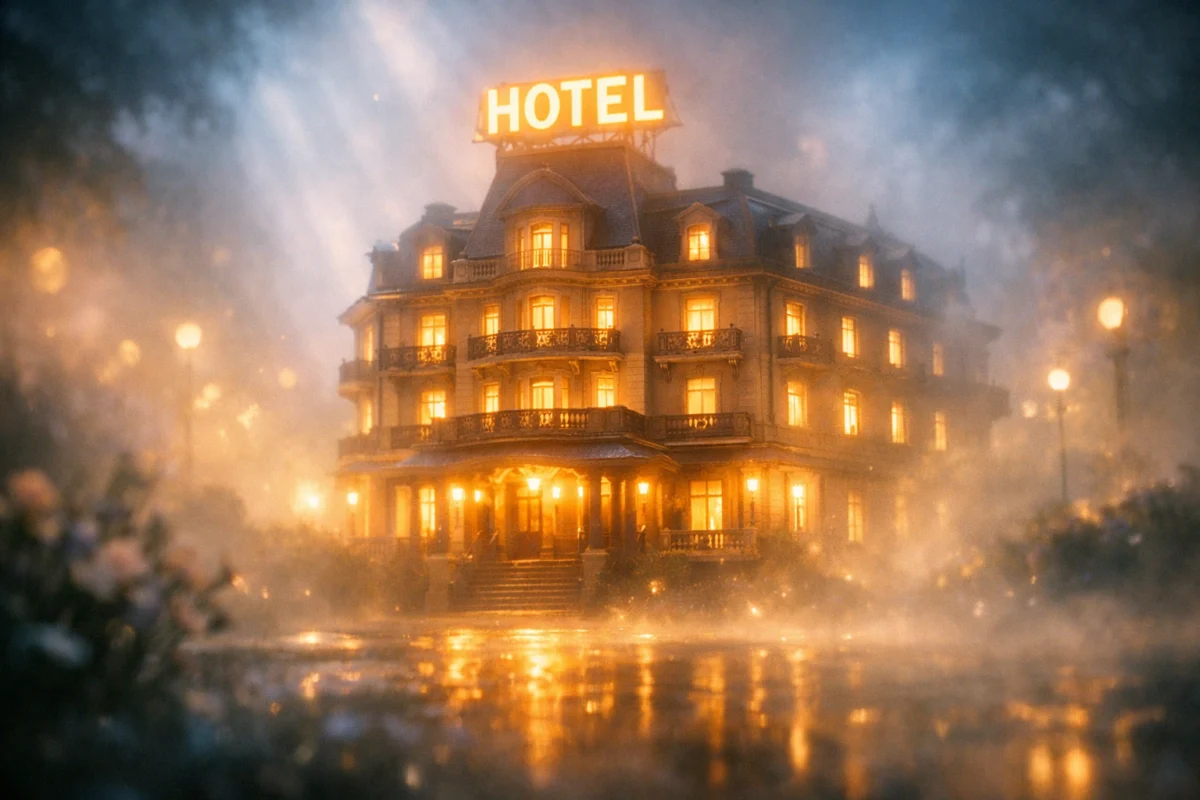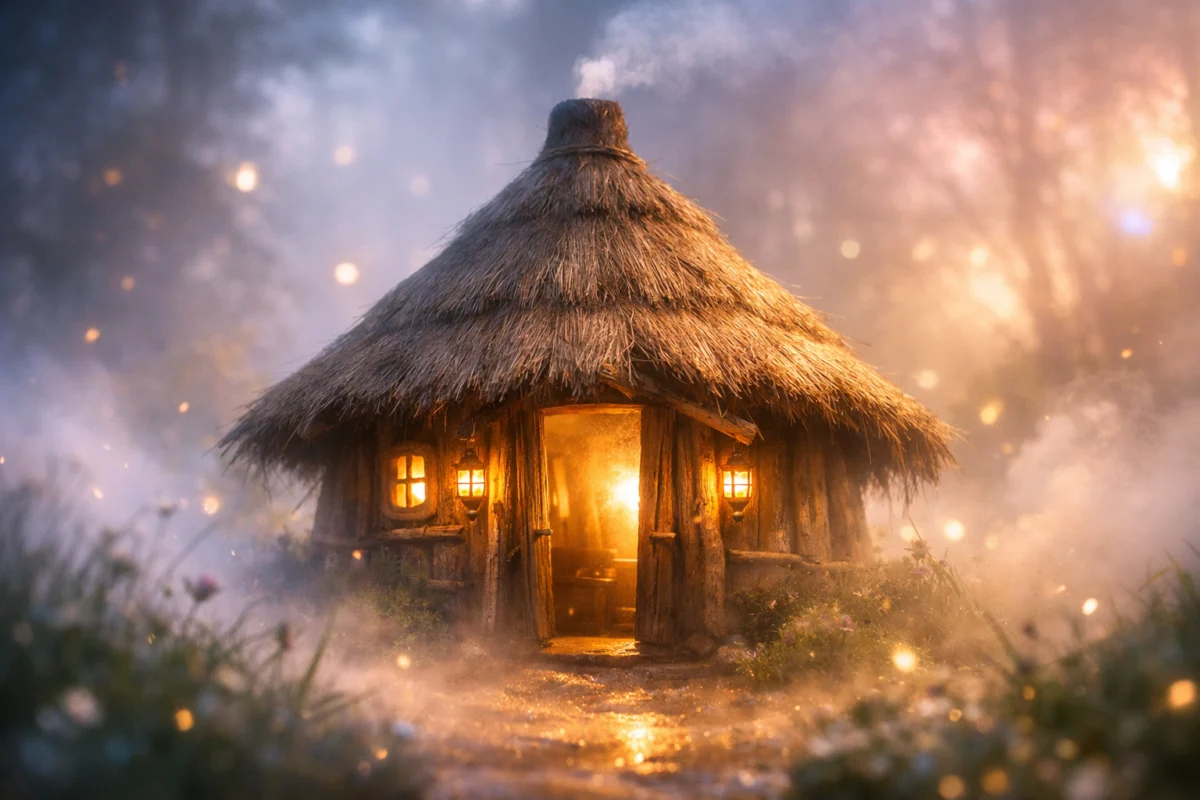


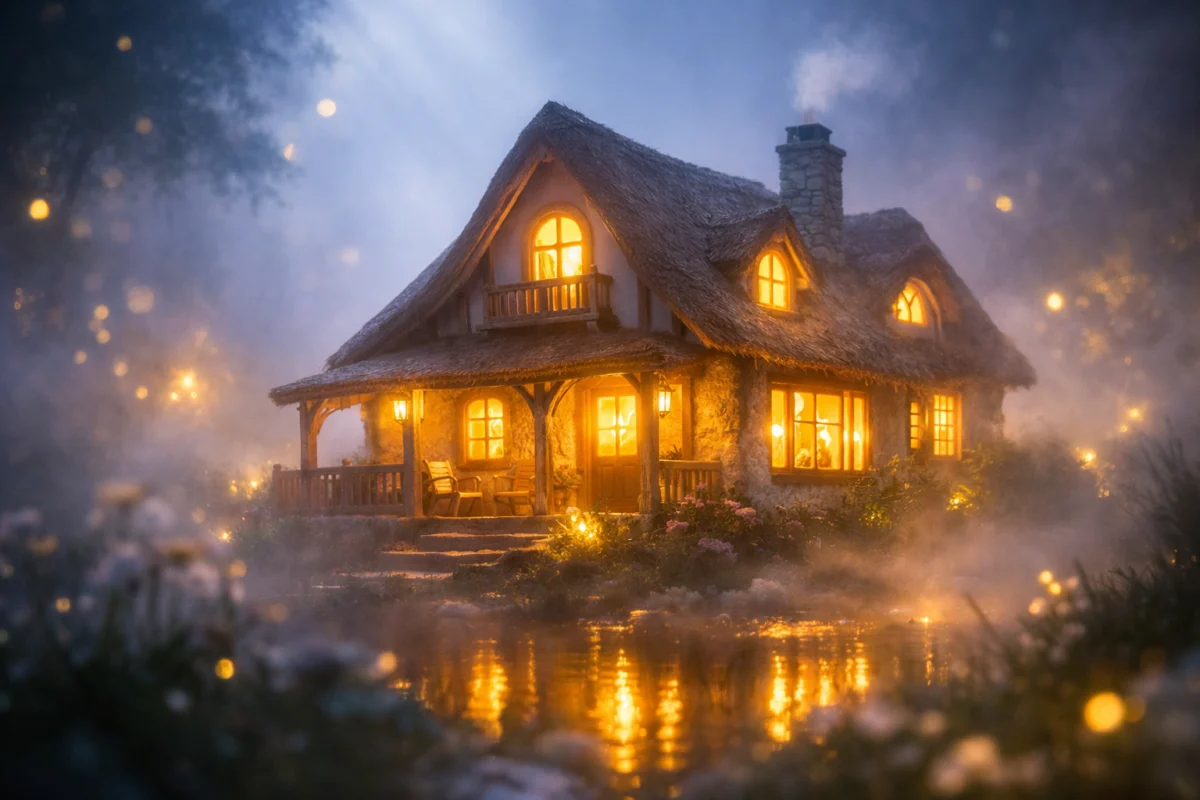
A house in a dream often represents your inner life, your personal identity, and the way you organize your sense of safety. It can point to your body, your mind, your private world, or the life structure you are currently living inside.
This symbol is flexible. A bright, steady house may suggest stability or growth, while a damaged, strange, or locked house may show uncertainty, pressure, or parts of yourself that need attention.
A house dream is not a prediction about your real home. Its meaning depends on the house condition, your actions, who is with you, and how you feel inside the dream.
House Dream Examples
- You walk into a clean, sunlit house with open windows and feel calm, as if you finally have room to breathe.
- You find your house flooded, with water rising through the floorboards while you try to save important objects.
- You explore a strange old house with many locked rooms and cannot decide whether you feel curious or uneasy.
- You invite friends or relatives into your house, but some guests respect your space while others enter rooms without asking.
- You see a tiny house standing alone on a hill during a storm, and you watch it from a distance instead of going inside.
- You repair a broken wall, repaint a room, or build an extra floor onto your house with your own hands.
House Dream Meaning: Good or Bad?
A house dream can feel good or bad depending on the condition of the house. A strong, bright, well-kept house often points to comfort, order, and self-trust. A collapsing, dirty, burning, or flooded house may show stress, emotional overload, or a part of life that feels unstable.
Your agency also matters. If you clean, repair, decorate, lock, open, or build the house, the dream may show that you are actively shaping your inner world. If you are trapped, chased, or unable to enter, the dream may reflect limits, avoidance, or confusion.
The people inside the house add social meaning. Welcome guests may suggest connection and openness, while intruders or crowding may point to boundary concerns. Overall, a house dream is neither automatically good nor bad; it shows how you are experiencing your personal space, identity, and life structure.
Positive Interpretation
If you dream of a clean, sunlit house with open windows, the dream may reflect mental clarity or a growing sense of ease. The cause is the house appearing safe, bright, and breathable. The effect is a feeling that your inner world has space for calm decisions and fresh energy.
If you build an extra floor or repair a broken wall, the house can symbolize active personal growth. Because you are improving the structure with your own hands, the dream may show that effort, planning, or self-care is helping you feel more capable.
If you welcome respectful guests into your house, the dream may suggest healthy connection. The house is still yours, but others are allowed in with consent. This can point to relationships where closeness does not erase your privacy or boundaries.
If you explore a new room and feel interested rather than afraid, the house may represent self-discovery. Finding new spaces can show that you are becoming aware of skills, memories, preferences, or emotions that were not obvious before. It is like your mind added a new room without asking for a building permit.
Negative Interpretation
If your house is flooded, the dream may reflect emotional pressure. Water often appears in dreams when feelings are strong, but the meaning depends on whether the water is clear, dirty, calm, or dangerous. Rising water inside a house can suggest that private emotions are becoming hard to contain.
If you are in a house with locked rooms, the dream may show uncertainty about what you are ready to face. This does not prove there is a hidden trauma or secret. When the evidence is weak, it is safer to read locked rooms as boundaries, unanswered questions, or areas of life you have not explored yet.
If people enter your house without permission, the dream may point to social stress or weak boundaries. The cause is intrusion into private space. The effect may be a feeling that others are demanding too much time, attention, explanation, or emotional access.
If you see a tiny house alone in a storm, the dream may reflect vulnerability or distance from support. The small scale and harsh weather can suggest that you feel exposed. However, if you are only watching from far away, the dream may also show observation rather than direct danger.
Different Cultures, Different Meanings
Modern symbolic interpretation: In many contemporary dream dictionaries, a house is commonly read as a symbol of the self, the body, or the structure of personal life. This is a broad symbolic pattern, not a fixed rule.
Depth psychology: In Jungian-style interpretation, different rooms of a house may represent different parts of the psyche, such as conscious life, memory, instinct, or hidden potential. Personal associations matter more than any one universal map.
Everyday social context: In practical life, a house often relates to privacy, safety, family roles, money, and responsibility. If those issues are active in your waking life, they may shape the dream more strongly than cultural symbolism.
Religious or ancestral meanings: Some people personally connect houses with lineage, blessing, duty, or spiritual shelter. Use this only if it fits your own background. A house dream does not automatically carry a religious message.
Psychological Perspectives
From a symbolic or psychodynamic view, a house can represent the self. Freud often focused on hidden wishes and personal associations, while Jung placed more attention on symbolic structures and inner development. In this kind of reading, the basement, attic, bedroom, kitchen, and front door may each show different layers of your private life.
From a cognitive or emotional-processing view, a house dream may help your mind organize recent experiences. If you have been dealing with change, responsibility, privacy, repairs, moves, or relationship boundaries, your brain may use the image of a house because it is familiar and easy to structure.
From the continuity hypothesis, dreams often continue themes from waking life, even when the dream setting is strange. From a threat-simulation view, linked with researcher Antti Revonsuo, a damaged or invaded house may let the mind rehearse danger, protection, or problem-solving. This does not mean danger is coming; it may only show the mind practicing responses.
House Symbol Variations & Context Cues
- Condition: A clean, sturdy house may suggest stability, while a broken, flooded, burning, or abandoned house may point to stress, neglect, or change.
- Color and material: A white house may feel simple or exposed, a dark house may feel private or unknown, a wooden house may feel natural or fragile, and a stone house may feel strong or rigid.
- Number and scale: A mansion can suggest ambition, overwhelm, or expanded identity, while a tiny house may point to simplicity, limitation, or feeling reduced.
- Movement and behavior: A house that moves, shakes, floats, grows, or collapses may show shifting identity, unstable plans, emotional change, or rapid adjustment.
- Hidden, found, or lost spaces: Secret rooms, missing doors, lost keys, or unknown hallways can suggest discovery, blocked access, forgotten needs, or unexplored parts of yourself.
- Location and social setting: A house in a city, forest, desert, childhood street, or crowded neighborhood changes the meaning. Notice whether you feel connected, exposed, isolated, or watched.
Related Symbols & Common Combinations
- Door: A door with a house often points to access, choice, privacy, or readiness to enter a new area of life.
- Room: A specific room narrows the meaning. Bedrooms may suggest privacy, kitchens may suggest nourishment, and bathrooms may suggest release or cleansing.
- Key: A key can show permission, control, discovery, or the ability to open something that was previously closed.
- Fire: Fire in a house may suggest urgency, anger, transformation, or fear of losing stability, depending on whether it warms, destroys, or spreads.
What You Should Do If You Dream About House
Start with the condition of the house. Ask whether it was clean, damaged, flooded, locked, bright, dark, crowded, or empty. The condition often shows the emotional tone of the dream more clearly than the house itself.
Notice the color and material. A glass house may make you think of visibility or exposure, while a brick house may suggest strength or heaviness. Your own associations matter, so write down what the material made you feel before choosing a meaning.
Look at number and scale. One house may point to a central life structure, while many houses may suggest choices, roles, or possible paths. A huge house can mean expansion, but it can also feel overwhelming if you are lost inside it.
Pay attention to your interaction. Were you entering, leaving, cleaning, hiding, repairing, buying, selling, building, or searching? Your action shows whether you are avoiding, protecting, changing, exploring, or taking ownership of something in your life.
Finally, place the house in its setting. A childhood street, unfamiliar city, remote forest, or busy neighborhood changes the reading. Also note who was present, because a house dream often becomes clearer when you connect privacy, boundaries, and social pressure.
House Vs Similar Dreams
| Aspect | House | Room | Building | Apartment |
|---|---|---|---|---|
| Occasion/Age or Context | Often appears during reflection on identity, stability, privacy, or life structure. | Often appears when one specific area of life or emotion is highlighted. | Often appears when work, society, systems, ambition, or public roles are central. | Often appears when shared space, independence, transition, or practical living issues matter. |
| Core Theme | Your personal self, inner world, safety, and boundaries. | A focused part of the self, such as rest, memory, creativity, or release. | External structure, status, organization, pressure, or collective life. | Personal space within a larger system, with themes of privacy and neighbors. |
| Typical Emotions | Comfort, fear, curiosity, protection, nostalgia, or unease. | Focus, intimacy, secrecy, discovery, or discomfort. | Ambition, pressure, confusion, awe, or responsibility. | Independence, crowding, adjustment, insecurity, or practical concern. |
| Common Symbols | Doors, keys, stairs, attic, basement, windows, roof, walls. | Bed, mirror, desk, closet, bath, light, locked door. | Elevator, office, lobby, floors, stairs, signs, crowds. | Neighbors, hallway, lease, balcony, shared walls, small rooms. |
See Also
More in this category: Locations dreams.
Sources & Further Reading
- NINDS Brain Basics: Understanding Sleep Sleep science
- APA Dictionary of Psychology: Dream Analysis Psychology reference
- Dreaming and the Brain: From Phenomenology to Neurophysiology Research
- Sleep and Dreaming Are for Important Matters Research
- Sleep Foundation: Dreams Editorial background
- Sleep Health Foundation: Dreaming Sleep science