


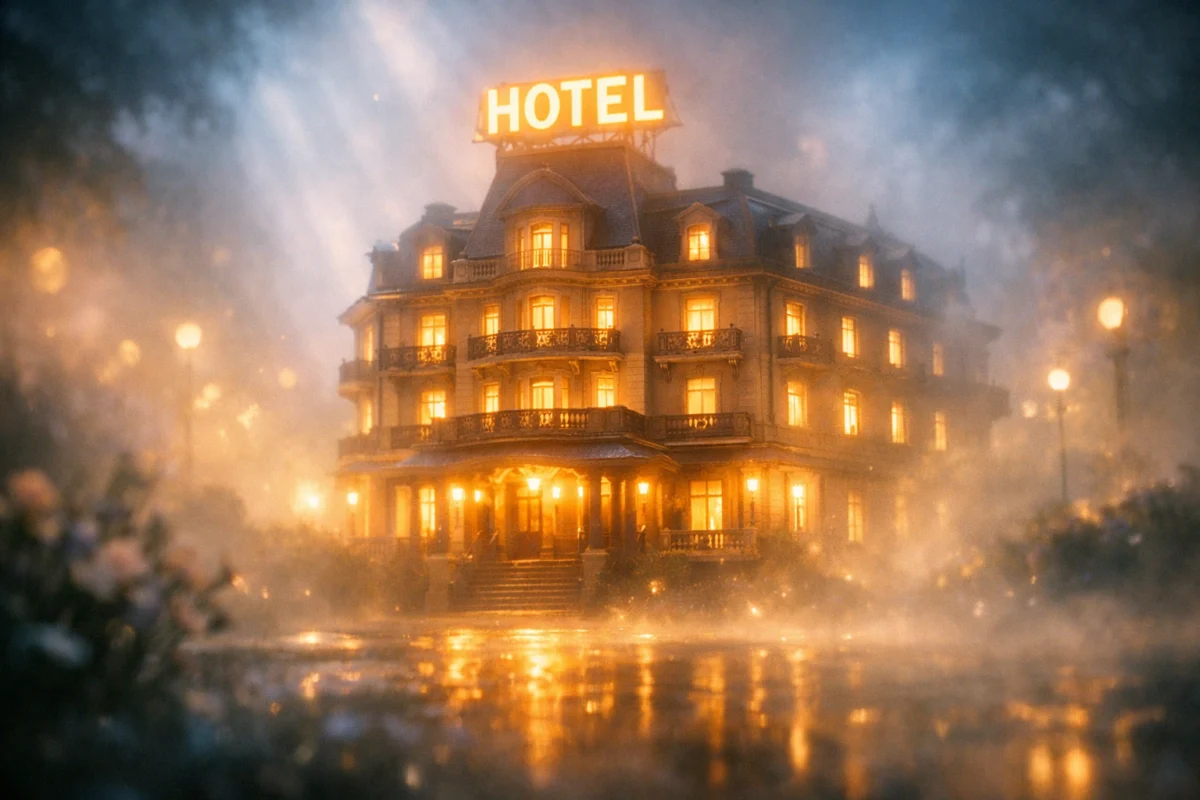
A hotel in a dream often symbolizes a temporary stage in your life. It can point to transition, travel, work pressure, emotional distance, privacy, rest, or uncertainty about where you belong.
Unlike a home, a hotel is not usually a place you fully own or control. Because of that, it may reflect a situation where you are adapting, waiting, recovering, exploring, or trying to function in an unfamiliar role.
The meaning depends on the dream details. A clean room, locked door, crowded lobby, missing key, luxury suite, or strange hallway can each change the message. A hotel dream is not a prediction. It is a symbolic snapshot of how you may be experiencing change.
Hotel Dream Examples
- You check into a bright, clean hotel room with a comfortable bed and feel relieved, as if you finally have space to breathe.
- You wander through a dark hotel hallway and cannot find your room number, while the doors all look the same.
- You stay in a large hotel during a business trip, but you are unsure whether you are there for work, rest, or something you forgot.
- You share a hotel room with a partner, friend, or stranger, and the mood shifts between closeness and awkward distance.
- You see an old hotel beside the sea, in the mountains, or in an unfamiliar city, and the setting feels more important than the building itself.
- You pack, unpack, check in, check out, lose your key card, or keep moving between hotel rooms without settling.
Hotel Dream Meaning: Good or Bad?
A hotel dream can feel positive when the hotel is clean, safe, peaceful, or beautiful. This may show that you are giving yourself permission to rest, step back, or pass through a life stage without needing every answer at once.
It can feel negative when you have no key, cannot find your room, feel watched, or are trapped in endless corridors. These details may point to confusion, weak boundaries, social pressure, or a sense that your current situation does not fully feel like yours.
Other people in the hotel matter too. Staff, guests, friends, strangers, or partners can show how you are handling privacy, support, roles, and expectations in shared spaces. Overall, a hotel dream is neither automatically good nor bad. It usually reflects how safe, free, and settled you feel during a temporary situation.
Positive Interpretation
If you dream of checking into a bright, clean hotel room and feeling relieved, the hotel may symbolize healthy distance from daily demands. The cause is a need for pause or separation, and the effect is emotional breathing room. Your mind may be showing that rest is not avoidance. Sometimes the best upgrade is simply a quiet room with no mystery stains.
If the hotel is large, elegant, or well organized, it can suggest that you are entering a new stage with more resources than you expected. A business hotel, conference hotel, or resort may reflect new responsibilities, but also new skills, confidence, or access to helpful people.
If you share a comfortable hotel room with someone and feel safe, the dream may point to trust within a temporary or changing relationship situation. Because a hotel is not permanent, the focus may be on how you and the other person act when routines are removed.
If you dream of checking out calmly, packing neatly, or leaving a hotel with your belongings, the symbol can show readiness to move on. The cause may be that a phase has served its purpose. The effect is a sense of closure, not necessarily a dramatic ending.
Negative Interpretation
If you cannot find your room in a hotel, the dream may reflect uncertainty about your place in a situation. The repeated doors, numbers, or hallways can symbolize too many options, unclear instructions, or a loss of personal direction. If the dream gives no other signs of stress, this meaning should stay light rather than alarming.
If the hotel room is dirty, broken, too small, or unsafe, it may show that a temporary arrangement is draining you. This could connect with work, travel, study, relationships, or living conditions. The condition of the room matters because it shows how supported or neglected you feel in that stage.
If you lose your key card, get locked out, or cannot pay for the room, the dream may point to access, permission, or control issues. You may feel that something you need is available but not fully within reach. This does not mean failure is coming. It may simply show frustration with rules, timing, or dependence on others.
If a stranger enters your hotel room, watches you, or ignores your boundaries, the dream can symbolize privacy concerns or social discomfort. Still, the interpretation should match the dream evidence. A strange guest is not automatically a danger symbol. In some dreams, a stranger may represent an unfamiliar part of yourself.
Different Cultures, Different Meanings
Modern travel context: Hotels are strongly tied to travel, work trips, holidays, waiting, and short stays. In many modern dreams, this practical meaning matters more than older folklore. Your own experience with hotels is often the strongest clue.
Hospitality and social roles: In some contexts, a hotel can symbolize being a guest, host, customer, worker, or outsider. This may reflect how welcome, served, judged, or responsible you feel in a social situation.
Luxury and status context: A grand hotel may suggest success, ambition, display, or comparison. This meaning depends on your feelings in the dream. Admiration, discomfort, guilt, or excitement can each point in a different direction.
Transit and liminal spaces: In symbolic interpretation, hotels often work like airports, stations, and waiting rooms. They can represent being between one identity, plan, or phase and another.
Psychological Perspectives
From a symbolic or psychodynamic view, a hotel may represent a temporary self. Freud and Jung are sometimes used in broad dream interpretation, but a hotel is best read through your personal associations. It may show a role you are trying on, a private space you do not fully own, or a threshold between inner and outer life.
From a cognitive or emotional-processing view, the dream may be sorting recent experiences linked with travel, work, social events, privacy, or planning. A confusing hotel layout may mirror mental overload. A peaceful room may reflect a need for recovery after too much stimulation.
From the continuity hypothesis, dreams often continue concerns from waking life. A hotel may connect with actual travel, relocation, job changes, temporary living, or shifting relationships. From a threat-simulation angle, being lost, locked out, or watched in a hotel may rehearse how you respond to uncertainty, exposure, or unfamiliar spaces.
Hotel Symbol Variations & Context Cues
- Condition: A clean, bright hotel can suggest rest, clarity, or helpful distance. A dirty, damaged, or haunted-feeling hotel may show stress, neglect, or unresolved discomfort in a temporary situation.
- Color and material: White rooms may point to simplicity or emotional blankness. Gold, marble, or glass can suggest status, visibility, or pressure to appear successful. Wood or warm colors may feel more grounded and personal.
- Number and scale: A single room may focus on privacy. A huge hotel with many floors can show complex choices, social systems, or ambition. A room number may matter if it has personal meaning to you.
- Movement and behavior: Checking in can show entering a phase. Checking out can show readiness to leave. Searching hallways may show uncertainty. Unpacking can suggest trying to settle, while constant packing may show restlessness.
- Hidden, found, or lost: A hidden room may point to an overlooked option or private feeling. A lost key can show blocked access. Finding your room can suggest regained direction or permission to rest.
- Location and social setting: A hotel by the ocean may connect with emotion and reflection. A city hotel may relate to work, ambition, or social life. A crowded lobby can show public pressure or shared expectations.
Related Symbols & Common Combinations
- House: A house usually points to identity, inner life, and what feels personally yours, while a hotel suggests a temporary role or stage.
- Room: A room narrows the focus to privacy, emotion, and personal space within the larger hotel situation.
- Key: A key or key card often adds themes of access, permission, control, and whether you can enter the space you need.
- Elevator: An elevator in a hotel can show movement between levels of status, awareness, mood, or responsibility.
What You Should Do If You Dream About Hotel
Start with the hotel condition. Ask whether the room felt clean, safe, crowded, broken, luxurious, empty, or neglected. This can show how supported you feel in your current temporary situation, project, relationship role, or life transition.
Notice color and material. A cold glass hotel may suggest visibility, distance, or pressure to perform. A warm, simple room may point to a need for comfort. A dark hotel may show uncertainty, but only if the dream also felt tense or unsafe.
Look at number and scale. One room may ask you to focus on your own boundaries. Many floors, endless doors, or a huge lobby may suggest too many choices or too much social input. If a room number stands out, connect it to your personal memories before giving it a fixed symbolic meaning.
Review your interaction with the hotel. Were you checking in, checking out, cleaning, working, hiding, waiting, or searching? Your action often gives the clearest meaning. It shows whether you are entering, leaving, managing, resisting, or trying to understand a phase.
Finally, connect the hotel location and social context to waking life. A beach hotel, airport hotel, business hotel, or isolated roadside motel may each point to a different kind of transition. Who was with you, who helped you, and who made you uncomfortable can show how social expectations are shaping the dream.
Hotel Vs Similar Dreams
| Aspect | Hotel | House | Apartment | Airport |
|---|---|---|---|---|
| Occasion/Age or Context | Often appears during travel, work changes, temporary living, transitions, or periods of emotional in-between. | Often appears when the dream focuses on identity, personal history, family patterns, or inner life. | Often appears when the dream focuses on independence, shared walls, personal routines, or current lifestyle structure. | Often appears during anticipation, departure, delays, choices, or movement toward a new direction. |
| Core Theme | Temporary place, adjustment, privacy, roles, and how settled you feel while passing through. | Personal self, belonging, memory, safety, and deeper emotional foundations. | Everyday independence, boundaries, neighbors, resources, and how you manage limited space. | Transition, timing, preparation, missed chances, and readiness to move forward. |
| Typical Emotions | Relief, uncertainty, curiosity, loneliness, luxury, stress, or feeling like a guest. | Comfort, nostalgia, fear, protection, ownership, or emotional exposure. | Privacy, pressure, practicality, independence, irritation, or self-management. | Excitement, anxiety, urgency, confusion, hope, or fear of delay. |
| Common Symbols | Room key, lobby, hallway, elevator, luggage, bed, staff, room number, check-in desk. | Bedroom, kitchen, attic, basement, front door, roof, windows, hidden rooms. | Lease, stairs, neighbors, balcony, small rooms, shared corridors, locked doors. | Tickets, gates, planes, luggage, security lines, announcements, passports, terminals. |
More in this category: Locations dreams.
Sources & Further Reading
- NINDS Brain Basics: Understanding Sleep Sleep science
- APA Dictionary of Psychology: Dream Analysis Psychology reference
- Dreaming and the Brain: From Phenomenology to Neurophysiology Research
- Sleep and Dreaming Are for Important Matters Research
- Sleep Foundation: Dreams Editorial background
- Sleep Health Foundation: Dreaming Sleep science