


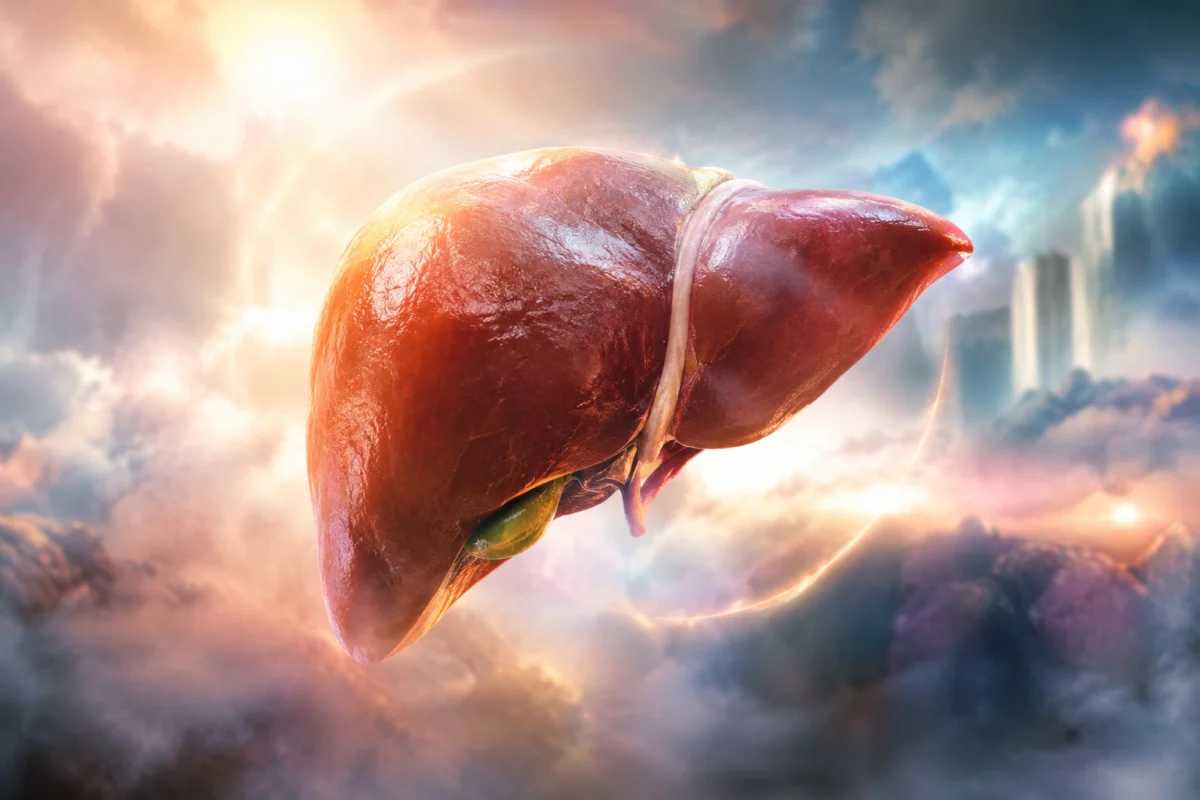
A liver in a dream may symbolize how you process experiences, manage strain, or sustain your sense of vitality. Its meaning depends on what happens to it and how you respond.
A clear, healthy-looking liver may suggest that something feels manageable, while a damaged or hidden one may bring attention to discomfort or uncertainty. These are possible associations, not fixed meanings.
A dream about a liver cannot predict illness, diagnose a health problem, or guarantee a future event. Your personal associations and the full dream context matter more than the symbol alone.
Liver Dream Examples
- You see a healthy liver glowing softly among green plants and feel calm. The scene may connect the symbol with renewal, steadiness, or a sense that you are coping well.
- You find a dark, cracked liver that crumbles when touched. This may reflect a feeling of strain or worry, but the image alone does not establish what is causing it.
- A liver rests in a clear glass jar at a market, and you cannot decide whether to approach it. The unusual, ambiguous scene may point to something you are examining but have not yet judged.
- A coworker offers you a carefully wrapped liver during a quiet meal. The exchange may bring attention to support, responsibility, or what you feel is being shared between you.
- You walk through an empty museum and see a liver displayed behind glass with no label. The setting may make the symbol feel distant, puzzling, or like a subject you are trying to understand.
- You wash mud from a liver in a basin until its surface becomes visible. This action may suggest an effort to clarify a complicated situation or separate what matters from what obscures it.
Liver Dream Meaning: Good or Bad?
The liver’s condition can influence the tone of the dream. A whole, clean, or living-looking liver may feel reassuring, while a damaged or discolored one may reflect unease. Neither appearance has a universal meaning.
Your agency matters too. Choosing to examine, clean, protect, or discard the liver can suggest a different relationship to the issue than being unable to move or watching events unfold. Notice whether you act willingly or feel pressured.
Other people and the setting also shape the interpretation. A familiar person offering the liver may bring up trust or obligation, while an isolated display may feel more impersonal. Overall, a liver dream is not inherently good or bad; its meaning depends on the details and your response.
Positive Interpretation
In Example 1, the healthy liver appears in a green, calm setting. If you felt at ease, the combination may reflect a sense of steadiness: the organ looks intact, so the dream’s image can support a feeling that you have enough capacity to handle what is in front of you.
In Example 4, a coworker offers a wrapped liver during a meal. If the exchange felt considerate rather than uncomfortable, the action may highlight cooperation. Someone shares something with you, and that gesture can make support or a shared responsibility more noticeable.
Example 6 focuses on washing away mud. Because you take action and the surface becomes clearer, the dream may suggest that careful attention is helping you see a matter more plainly. It does not prove that a particular problem will be solved; it emphasizes the process of looking closely.
Example 3 can also take a positive direction if curiosity outweighs hesitation. The liver is available for inspection, and your uncertainty may show that you are considering a choice without rushing to judge it. The useful meaning lies in your willingness to notice your reaction.
Negative Interpretation
In Example 2, the cracked liver crumbles under your touch. If the dream felt frightening or helpless, the image may echo a sense that your resources are under pressure. That is a possible emotional reading, not evidence of a real-world condition or a prediction of loss.
Example 3 may feel unsettling if the jar makes the liver seem exposed or out of place. The uncertainty could reflect discomfort with a subject you are inspecting. If you felt no fear, however, the image may simply be strange rather than a sign of distress.
In Example 5, the unlabeled display can suggest distance or a lack of explanation when the empty museum feels lonely or cold. You may be encountering an issue without enough context to understand it. The dream does not reveal what that issue must be, so your own associations are important.
Example 4 could also feel negative if the offer seemed forced or created a sense of debt. In that case, the exchange may bring attention to an unwanted obligation or uncertainty about boundaries. A single dream image is weak evidence for a specific conflict, so consider how the relationship feels when you are awake.
Different Cultures, Different Meanings
There is no single, stable cultural meaning for a liver dream that should be applied to everyone. Treat this section as modern symbolic and context notes, not as a claim about a universal tradition or folklore.
In everyday language, people may associate an organ with bodily vitality or with the idea of processing something. These are broad associations, not rules. Your own experience with the word, the organ, or the dream image may be more relevant than a general symbolic reading.
If a particular family, community, faith, or cultural practice gives the liver a specific meaning for you, that personal context can matter. Interpret it cautiously and avoid assuming that the same association applies to people from the same background.
Psychological Perspectives
A symbolic or psychodynamic reading treats the liver as an image that may stand in for a private concern, a capacity, or something you are trying to manage. A Jungian-style approach might ask what the image means to you personally, rather than assigning it one fixed definition. This is a reflective lens, not a clinical conclusion.
From a cognitive and emotional-processing perspective, the dream may combine recent impressions, memories, and feelings into an unusual scene. A conversation, a picture, or a passing thought about the body could help supply the image, while the emotion in the dream may show what currently feels important to you.
The continuity hypothesis proposes that some dream content reflects themes from waking life. A threat-simulation perspective asks whether a frightening scene lets you experience danger or uncertainty in a dream. Neither approach can establish that a liver dream predicts harm; they offer questions about possible links between the dream and your recent concerns.
Liver Symbol Variations & Context Cues
- Condition: A whole, damaged, swollen, or decaying liver can change the dream’s emotional tone. Notice whether it seems cared for, neglected, or beyond your control.
- Color or material: A natural-looking, unusually pale, dark, shiny, or artificial liver may feel different. Glass, stone, or another material can make the image seem protected, exposed, or unreal.
- Number or scale: One liver may focus attention on a particular concern, while many or an oversized liver may make the theme feel multiplied or hard to ignore. Size alone does not establish importance.
- Movement or behavior: An organ that pulses, changes, falls, or stays still can make the scene feel active or fixed. Consider whether you watched, caused, or tried to stop the movement.
- Hidden, found, or lost: Finding a liver may bring a neglected subject into view; hiding or losing one may relate to uncertainty or avoidance. The feeling you had during the event helps distinguish these possibilities.
- Location or social setting: A home, workplace, market, museum, or medical setting can connect the image with different parts of your life. Who was present and how they behaved can matter as much as the location.
Related Symbols & Common Combinations
- Heart: A heart often draws attention to emotion, attachment, or personal importance. If both organs appear, compare the dream’s feelings with its themes of processing and vitality.
- Stomach: A stomach may connect with taking in or digesting an experience. Together, the symbols can suggest that you are considering how an experience affects you.
- Blood: Blood can make a dream feel more urgent, vivid, or exposed. Its presence may shift attention toward energy, vulnerability, or the scene’s intensity.
- Hospital: A hospital setting can place an organ image in a context of care, concern, or observation. It does not mean the dream is a diagnosis or a forecast.
What You Should Do If You Dream About Liver
Start with the condition of the liver. Write down whether it looked healthy, damaged, clean, or unfamiliar, then note the emotion that came with that detail. Avoid treating appearance as proof of a literal health issue.
Record its color and material, especially if they were unusual. Ask what those features remind you of personally. A dark surface might feel ominous to one dreamer and simply striking to another.
Notice the number and scale. Was there one liver, several, or an exaggerated version? Consider whether the image felt central or incidental in the dream, rather than assuming that size or quantity has a fixed meaning.
Describe your interaction with it. You might have examined, received, cleaned, avoided, or lost it. The action can help you consider whether you felt curious, responsible, uncomfortable, or in control.
Finally, place the dream in its location and social context. Note who was present and what had recently occupied your attention. You can use these details to form a tentative interpretation, then keep it flexible if the dream does not connect clearly to your waking life.
Liver Vs Similar Dreams
| Aspect | Liver | Heart | Stomach | Kidney |
|---|---|---|---|---|
| Occasion/Age or Context | May appear when you are considering strain, vitality, or processing. | May appear in emotionally important or attachment-related scenes. | May appear around taking in or digesting an experience. | May appear in scenes focused on balance, separation, or bodily imagery. |
| Core Theme | Managing, processing, or sustaining capacity. | Emotion, care, or personal importance. | Receiving and processing experience. | Choice, balance, or paired parts of a situation. |
| Typical Emotions | Concern, curiosity, steadiness, or uncertainty. | Affection, worry, grief, or closeness. | Discomfort, anticipation, or relief. | Unease, focus, or a sense of comparison. |
| Common Symbols | Color, condition, display, cleaning, or exchange. | Blood, chest, pulse, or offering. | Food, fullness, nausea, or digestion. | Water, pairs, filtering, or bodily inspection. |
See Also
More in this category: Body parts dreams.
Sources & Further Reading
- NINDS Brain Basics: Understanding Sleep Sleep science
- APA Dictionary of Psychology: Dream Analysis Psychology reference
- Dreaming and the Brain: From Phenomenology to Neurophysiology Research
- Sleep and Dreaming Are for Important Matters Research
- Sleep Foundation: Dreams Editorial background
- Sleep Health Foundation: Dreaming Sleep science