

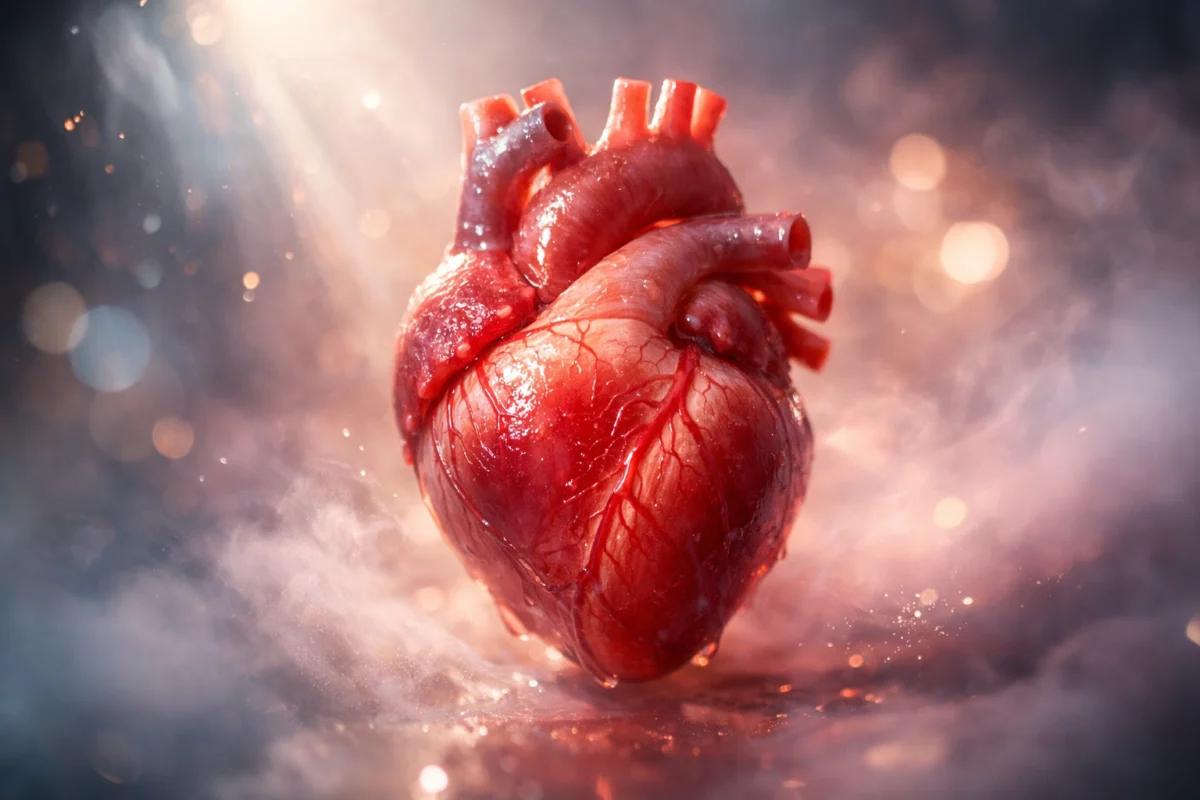
A heart in a dream often points to your emotional center: what you care about, what feels vulnerable, and what gives you energy. It can represent affection, courage, sincerity, conscience, or the need to listen more closely to your inner response.
This symbol is not a prophecy and not a medical diagnosis. A dream heart does not automatically mean love is coming, danger is near, or something is wrong with your body. It is better read as a reusable symbol shaped by condition, color, location, behavior, and your feelings in the dream.
Dreaming itself can happen across different sleep stages, not only during REM sleep, and dreams often combine memory, emotion, and imagination. So when a heart appears, ask what part of your waking life currently feels emotionally important, exposed, repaired, guarded, or ready to grow.
Heart Dream Examples
1. You see a bright red heart glowing in your hands. This may suggest emotional warmth, confidence, or a clear sense of what matters to you right now.
2. You find a cracked glass heart on the floor. This can point to sensitivity, disappointment, or a feeling that something precious needs careful handling.
3. You hear a giant heartbeat echoing through an empty room. This may reflect heightened awareness, pressure, anticipation, or a feeling that your emotions are louder than usual.
4. Someone gives you a paper heart with your name on it. This can relate to recognition, connection, affection, or uncertainty about whether a gesture is deep or temporary.
5. You discover a heart-shaped stone beside a river. This setting-based dream may suggest emotional steadiness, memory, or feelings shaped slowly over time.
6. You sew a torn heart back together. This action-based dream often points to repair, effort, forgiveness, self-respect, or rebuilding emotional trust one stitch at a time. Very crafty of your sleeping brain.
Heart Dream Meaning: Good or Bad?
A heart dream can feel good or bad depending on its condition. A healthy, glowing, warm, or steady heart often suggests emotional clarity or openness. A broken, bleeding, frozen, or hidden heart may suggest stress, hurt, distance, or a need for care.
Your agency in the dream matters. Holding, protecting, healing, or choosing a heart can show active emotional involvement. Losing, ignoring, chasing, or being unable to reach a heart may point to hesitation, avoidance, or confusion about what you truly want.
Relationships and social context also change the meaning. A heart given by a friend, stranger, partner, child, or crowd may reflect different kinds of connection, approval, vulnerability, or pressure. Overall, a heart dream is neither automatically good nor bad; it shows where emotional meaning is active.
Positive Interpretation
If you dream of a bright red heart glowing in your hands, the positive meaning often comes from the combination of warmth, light, and control. Because the heart is in your hands, the dream may suggest you are becoming more aware of your feelings and more able to handle them with confidence.
If someone gives you a paper heart with your name on it and the mood feels kind, the dream may reflect a simple need to be seen or appreciated. The paper material can make the gesture feel small or delicate, but that does not make it meaningless. Sometimes the dream is about noticing small signs of care.
If you find a heart-shaped stone beside a river, the positive message may involve emotional steadiness. Stone suggests durability, while the river suggests movement. Together, they can show that your feelings are changing, but your core values are staying grounded.
If you sew a torn heart back together, the action matters more than perfection. The dream may point to recovery through patient effort. Because you are repairing the heart yourself, it can suggest self-respect, emotional responsibility, or a willingness to mend something without pretending it was never damaged.
Negative Interpretation
A cracked glass heart can carry a negative tone when the dream feels tense or sad. Glass suggests beauty and fragility, so the image may reflect fear of being hurt, fear of saying too much, or a sense that an emotional situation needs careful handling. If the dream gives no clear relationship clues, avoid assuming it is about romance.
A giant heartbeat in an empty room may feel overwhelming. The sound can symbolize pressure, nervous anticipation, or a feeling that one emotion is taking up too much space. Still, if you recently watched a dramatic scene, heard medical sounds, or felt physically aware before sleep, the dream may simply borrow those impressions.
Losing a heart, dropping it, or watching it disappear can suggest emotional disconnection or uncertainty. The negative meaning is stronger if you feel panic, guilt, or regret in the dream. If you feel relief instead, the symbol may point to letting go of a burden rather than losing something valuable.
A black, frozen, or locked heart may suggest guardedness, emotional fatigue, or distance. This does not mean you are cold or uncaring. It may simply show that part of you is protecting itself, especially if the dream setting feels unsafe, crowded, or demanding.
Different Cultures, Different Meanings
Modern Western symbolism: The heart is widely linked with love, compassion, sincerity, and personal feeling. In dreams, that association may be relevant, but personal context matters more than greeting-card logic.
Religious and spiritual language: In many traditions, the heart can represent conscience, devotion, purity, or inner truth. Use this only if those ideas are meaningful in your own life, because a dream symbol does not need a religious meaning to be valid.
Medical and body awareness contexts: Because the physical heart is vital, dream hearts can appear when you are more aware of health, stress, exercise, or the body. This is symbolic unless waking symptoms are present, in which case real-world care matters more than dream interpretation.
Art and design: Heart shapes in logos, messages, jewelry, tattoos, and digital icons can influence dream imagery. A heart emoji in a dream may be more about communication style, social signals, or approval than deep emotional destiny.
Psychological Perspectives
From a symbolic or psychodynamic view, a heart dream can represent your private emotional life. Freud might have looked for hidden wishes or conflicts, while Jung might see the heart as a symbol of inner wholeness, feeling, or the center of the self. In simple terms, the heart may show what you value and where you feel exposed.
From a cognitive and emotional-processing view, the dream may help your brain organize feelings from recent events. Sleep research shows that dreaming relates to brain activity involved in perception, memory, and emotion across sleep stages. So a dream heart may combine real concerns, body sensations, and emotional memories into one clear image.
From continuity-hypothesis and threat-simulation views, the dream may continue themes from waking life or rehearse emotional challenges. Revonsuo is often linked with threat-simulation theory, where dreams may model danger or stress. A damaged heart might simulate emotional risk, while a repaired heart might model resilience.
Heart Symbol Variations & Context Cues
- Condition: A glowing, steady, cracked, bleeding, frozen, or stitched heart changes the meaning from openness to strain, protection, or repair.
- Color or material: Red may suggest warmth or intensity, black may suggest heaviness or guardedness, gold may suggest value, glass may suggest fragility, and stone may suggest endurance.
- Number or scale: One heart may focus on a single emotional issue, many hearts may point to social attention, and a giant heart may show oversized feeling or pressure.
- Movement or behavior: Beating, floating, shrinking, glowing, hiding, or breaking shows whether the emotion feels alive, distant, fading, hopeful, secret, or strained.
- Hidden, found, or lost: Finding a heart can suggest rediscovery, hiding one may show protection, and losing one may reflect fear of disconnection or relief from emotional overload.
- Location or social setting: A heart in a bedroom, hospital, school, workplace, church, street, or forest points to the life area where feeling, duty, privacy, or belonging is being processed.
Related Symbols & Common Combinations
- Blood: Often intensifies themes of life force, emotional cost, urgency, or deep personal investment.
- Chest: Can point to protection, breath, courage, vulnerability, or what you keep close.
- Hands: Suggest agency, care, responsibility, giving, receiving, or the way you handle feelings.
- Rings or gifts: May connect the heart to commitment, promises, appreciation, obligation, or social meaning.
What You Should Do If You Dream About Heart
Start with the heart’s condition. Was it whole, cracked, bleeding, glowing, frozen, missing, or being repaired? The condition gives the clearest clue about whether the dream is emphasizing openness, strain, protection, loss, or recovery.
Next, note the color and material. A red velvet heart, a glass heart, a metal heart, and a paper heart do not carry the same tone. Ask what the material felt like: strong, fake, delicate, precious, heavy, warm, or temporary.
Look at number and scale. One small heart may point to a private feeling, while a wall covered in hearts may suggest social attention, approval, or emotional noise. A huge heart can mean generosity, but it can also mean the feeling has become too large to ignore.
Pay attention to interaction. Were you holding it, giving it away, hiding it, stealing it, protecting it, or repairing it? Your action shows your current relationship to the emotion. If someone else controlled the heart, consider how that person or role affects your sense of emotional choice.
Finally, place the heart back in its dream location. A heart in your home may relate to personal life, while one at work may suggest values, pressure, or emotional labor. A heart in public may involve visibility, social judgment, or the wish to be understood without having to make a giant announcement. Convenient, but dreams rarely file paperwork.
Heart Vs Similar Dreams
| Aspect | Heart | Chest | Blood | Rings |
|---|---|---|---|---|
| Occasion/Age or Context | Appears during emotional decisions, vulnerability, affection, repair, or value conflicts. | Appears when protection, breathing, courage, pressure, or personal boundaries are central. | Appears in intense dreams about life force, injury, sacrifice, urgency, or emotional cost. | Appears around promises, loyalty, social roles, cycles, partnership, or commitment questions. |
| Core Theme | Emotional center, care, sincerity, vulnerability, and what matters most. | Guarding what is inside, showing courage, or feeling exposed. | Energy, loss, vitality, pain, intensity, or deep involvement. | Bond, agreement, identity, repetition, or chosen responsibility. |
| Typical Emotions | Tenderness, fear, warmth, longing, relief, sadness, or hope. | Tension, bravery, tightness, safety, pressure, or guarded calm. | Alarm, urgency, shock, empathy, exhaustion, or seriousness. | Security, doubt, pride, pressure, devotion, or uncertainty. |
| Common Symbols | Red color, heartbeat, glow, cracks, stitches, gifts, hands, or heart shapes. | Armor, wounds, breath, clothing, ribs, pressure, or hidden objects. | Cuts, stains, veins, bandages, weapons, hospitals, or red water. | Circles, gold, boxes, ceremonies, fingers, jewelry, or repeated patterns. |
More in this category: Body parts dreams.
Sources & Further Reading
- The Neural Correlates of Dreaming research
- NINDS Brain Basics: Understanding Sleep sleep science