

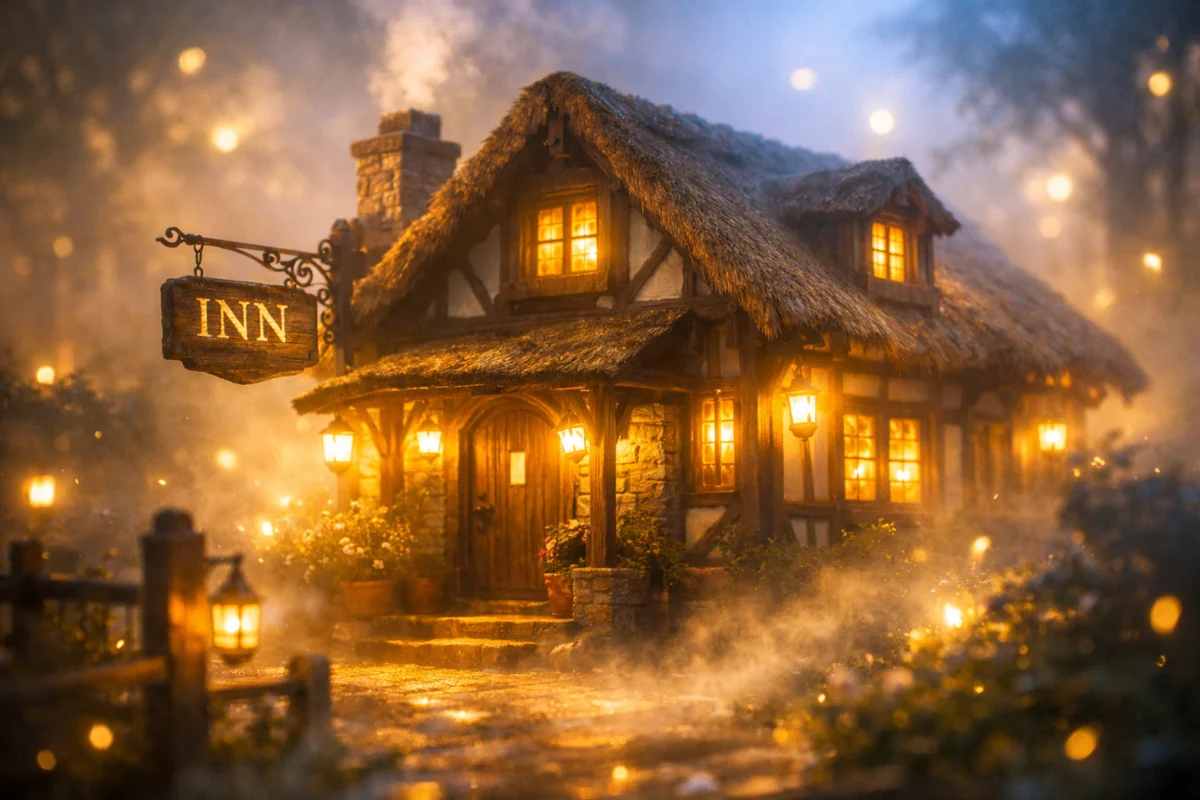
An inn in a dream often symbolizes a temporary place in your life. It can point to rest, transition, travel, uncertainty, social contact, or the need for shelter while you move from one stage to another.
Unlike a permanent home, an inn is usually a short stay. Because of that, dreaming of an inn may show how you are handling something that is not settled yet, such as a new job, a changing relationship, a decision, or a period of waiting.
The meaning depends on the inn’s condition, your role in the dream, who is there, and whether you feel welcome or trapped. An inn dream is not a prediction. It is a symbolic scene that may help you notice how you relate to rest, belonging, privacy, and change.
Inn Dream Examples
- You arrive at a warm, clean inn after a long journey and feel relieved when someone gives you a room.
- You enter a dark, broken inn where the doors do not lock, and you feel unsafe staying there.
- You walk through a quiet roadside inn but cannot decide whether to check in or keep traveling.
- You meet an old friend, partner, or stranger at an inn table and have an honest conversation.
- You find an inn in the middle of a forest, desert, mountain road, or unfamiliar town.
- You work at the inn, clean rooms, serve guests, or search for a missing room key.
Inn Dream Meaning: Good or Bad?
An inn dream can feel good when the place is clean, warm, well lit, and welcoming. These details may suggest you are giving yourself permission to pause, recover, or accept support during a temporary phase.
It can feel negative when you have no control, cannot leave, cannot find your room, or feel watched. These cues may show uncertainty, weak boundaries, or stress about depending on people or systems you do not fully trust.
Relationships also matter. Friendly staff or kind guests can point to helpful connection, while hostile strangers may show social pressure or discomfort in a shared space. Overall, an inn dream is good or bad depending on how safe, free, and respected you feel inside it.
Positive Interpretation
If you arrive at a warm inn after a long journey, the dream may reflect recovery after effort. The journey shows strain or movement, while the inn gives shelter. Cause and effect are clear: after pushing through something, your mind may create a place where you can rest and gather strength.
If someone gives you a room, the dream may point to receiving help or accepting temporary support. The room is not a permanent home, but it is yours for the moment. This can suggest that short-term help, a pause, or a safe boundary may be enough for now.
If you meet someone at an inn table and the conversation feels honest, the inn may symbolize neutral ground. You are not fully in your private home or in a public crowd. Because the setting is in between, the dream may allow a more balanced exchange, especially about topics that need calm distance.
If you work at the inn and feel capable, the dream may show service, order, and responsibility during change. Cleaning rooms or helping guests can suggest that you are making space for new experiences. Even small practical actions may help you feel more prepared.
Negative Interpretation
If the inn is dark, dirty, or broken, it may reflect a temporary situation that does not feel supportive. The unsafe building does not prove real danger, but it can mirror your sense that something meant to help you is not meeting your needs.
If the doors do not lock, the dream may point to weak privacy or poor boundaries. This is especially likely if you feel exposed, interrupted, or unable to choose who enters your space. If the dream gives no emotional clue, the meaning is weaker and may simply come from an ordinary memory of hotels or travel.
If you cannot decide whether to check in or keep traveling, the inn may symbolize hesitation. You may be between continuing forward and stopping to reflect. The negative side is not the pause itself, but the anxiety of not trusting either choice.
If you search for a missing key, the dream may show frustration about access, readiness, or permission. A key often represents the ability to enter, secure, or understand a space. If you never find it, the dream may reflect a current question that still feels unresolved.
Different Cultures, Different Meanings
Modern travel context: In many present-day dreams, an inn is best read through travel, rest, and temporary lodging. Personal experience matters more than any fixed cultural meaning. If you often travel, the inn may simply use a familiar image to show transition.
Hospitality and social meaning: Inns can be linked with welcome, hosting, and shared shelter in a broad symbolic sense. This does not mean every inn dream is about generosity. It may simply ask whether you feel received, ignored, judged, or cared for in a shared space.
Story and folklore settings: Inns often appear in stories as meeting places for travelers, strangers, rumors, and turning points. If your dream feels like a tale or quest, the inn may represent a pause before the next step, not a final destination.
Personal memory context: If you have worked in hospitality, stayed in an old inn, or had a strong travel memory, that history can shape the meaning. Your own associations should come before general symbolism.
Psychological Perspectives
From a symbolic or psychodynamic view, an inn may represent a temporary inner shelter. Freud often focused on hidden wishes and personal associations, while Jung paid attention to symbolic places and journeys. In that broad sense, the inn can be a threshold space where you meet parts of yourself, other people, or unfinished questions.
From a cognitive or emotional-processing view, the dream may combine recent stress, travel images, social situations, and the need to rest. The inn becomes a mental setting where your brain organizes feelings about being between places, depending on others, or needing privacy. No dusty room key is required, thankfully.
From the continuity hypothesis, dreams often continue waking concerns in symbolic form. If you are dealing with change, temporary housing, a new role, or uncertainty, an inn can echo that. From a threat-simulation view, an unsafe inn may let your mind rehearse caution, boundaries, or escape without saying that danger will happen.
Inn Symbol Variations & Context Cues
- Condition: A clean inn may suggest support and recovery, while a ruined inn may show stress, neglect, or distrust of a temporary situation.
- Color or material: A wooden inn can feel warm, old, or rustic. A white inn may suggest simplicity or emotional distance. Dark stone may feel protective or heavy, depending on the mood.
- Number or scale: A tiny inn may point to limited options or intimacy. A huge inn with endless halls may suggest overwhelm, anonymity, or too many choices.
- Movement or behavior: Checking in may show acceptance of a pause. Leaving may show readiness to move on. Wandering inside may show uncertainty about your place.
- Hidden, found, or lost: A hidden inn may suggest unexpected support. A lost inn may show missed rest. A missing room or key may show blocked access or unclear permission.
- Location and social setting: An inn in a forest, city, mountain, or road can change the meaning. Friendly guests suggest connection, while silent or hostile guests may suggest social tension.
Related Symbols & Common Combinations
- Hotel: A hotel dream is often more impersonal, public, or modern than an inn, and may focus on roles, status, or temporary identity.
- House: A house usually points to private life, self-image, or inner structure, while an inn suggests a less permanent stage or borrowed space.
- Road: A road with an inn often highlights a journey, decision point, or need to rest before continuing.
- Key: A key in an inn dream can symbolize access, privacy, readiness, or the ability to secure your own space.
What You Should Do If You Dream About Inn
First, note the condition of the inn. Was it clean, crowded, abandoned, old, luxurious, or falling apart? This can show how supported or unsupported you feel in a temporary situation. Ask yourself where in life you feel between one stage and another.
Next, remember the color and material. Warm wood, soft light, and simple rooms may point to comfort and grounding. Cold metal, dark stone, or harsh lighting may suggest distance, pressure, or emotional caution. The physical details often carry the emotional tone.
Then look at number and scale. One small room may suggest a focused need for privacy. Many rooms may suggest choices, roles, or hidden areas of thought. An inn that is too large to navigate may reflect feeling lost in options or expectations.
Pay attention to your interaction. Were you checking in, checking out, paying, serving, hiding, waiting, or searching for someone? Your action shows your level of agency. A calm check-in may suggest acceptance of a pause, while frantic searching may point to unresolved pressure.
Finally, consider the location and social context. An inn beside a road may relate to progress. An inn in a forest may suggest solitude or uncertainty. An inn full of kind people may show support, while a hostile crowd may show discomfort with shared expectations.
Inn Vs Similar Dreams
| Aspect | Inn | Hotel | House | Cabin |
|---|---|---|---|---|
| Occasion/Age or Context | Often appears during transitions, travel, waiting periods, or temporary life arrangements. | Often appears in dreams about public identity, travel, status, work, or short-term roles. | Often appears when the dream concerns private life, self-image, memory, or personal stability. | Often appears in dreams about retreat, solitude, nature, simplicity, or separation from daily noise. |
| Core Theme | Temporary shelter, pause, shared space, and being between stages. | Temporary identity, service, anonymity, public comfort, or social performance. | Inner structure, belonging, family patterns, privacy, and personal foundations. | Withdrawal, quiet, survival, independence, or a need to simplify. |
| Typical Emotions | Relief, uncertainty, welcome, exposure, curiosity, or hesitation. | Excitement, confusion, luxury, impersonality, pressure, or detachment. | Comfort, fear, nostalgia, safety, invasion, or familiarity. | Peace, loneliness, caution, freedom, or isolation. |
| Common Symbols | Room key, innkeeper, travelers, shared table, road, luggage, guest room. | Lobby, elevator, room number, front desk, hallway, reservation, suitcase. | Rooms, doors, attic, basement, kitchen, bedroom, windows. | Fireplace, woods, snow, lake, wooden walls, tools, path. |
More in this category: Locations dreams.
Sources & Further Reading
- NINDS Brain Basics: Understanding Sleep Sleep science
- APA Dictionary of Psychology: Dream Analysis Psychology reference
- Dreaming and the Brain: From Phenomenology to Neurophysiology Research
- Sleep and Dreaming Are for Important Matters Research
- Sleep Foundation: Dreams Editorial background
- Sleep Health Foundation: Dreaming Sleep science