

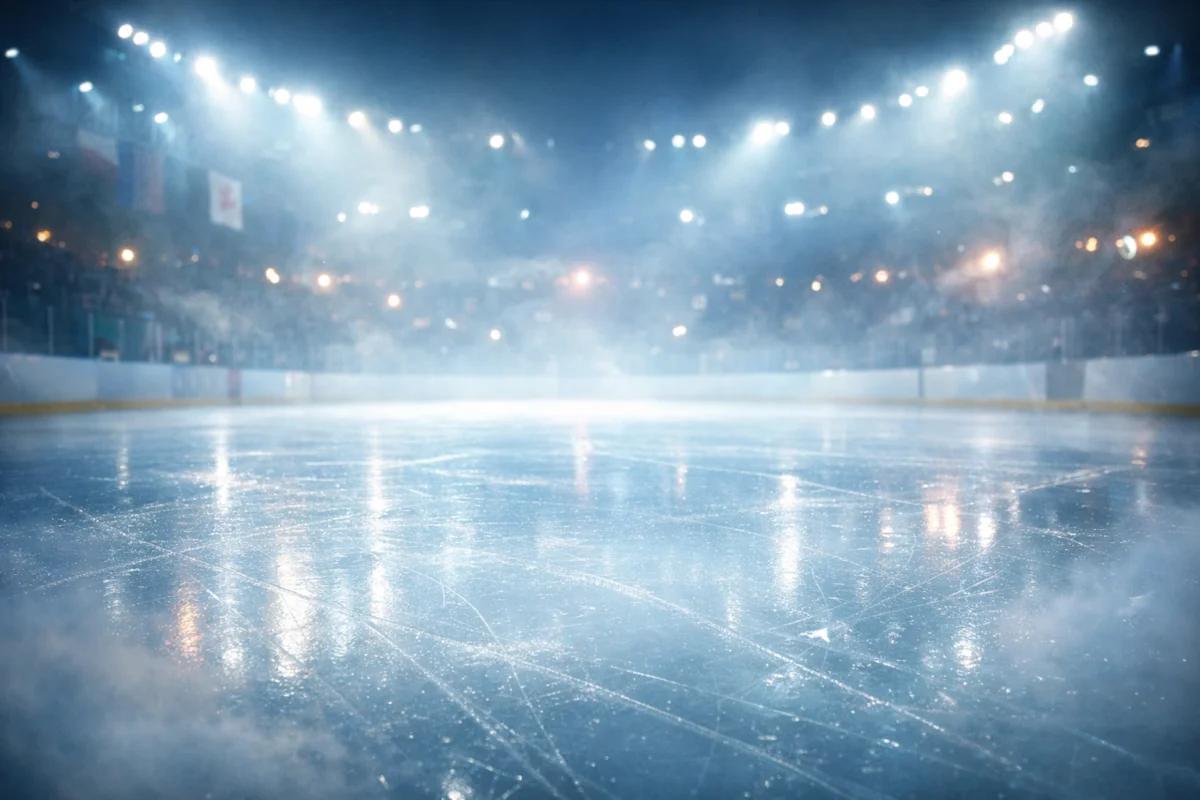
An ice rink in a dream often symbolizes a controlled emotional space. Ice is slippery, cold, and reflective, but the rink has borders, rules, and a surface made for movement. This can point to how you handle feelings, pressure, skill, social performance, or careful progress.
- Ice Rink Dream Examples
- Ice Rink Dream Meaning: Good or Bad?
- Different Cultures, Different Meanings
- Psychological Perspectives
- Ice Rink Symbol Variations & Context Cues
- Related Symbols & Common Combinations
- What You Should Do If You Dream About Ice Rink
- Ice Rink Vs Similar Dreams
- Sources & Further Reading
- FAQ
Because an ice rink is not wild ice, it usually suggests a situation where risk is present but managed. You may be practicing balance, testing confidence, or trying to look calm while something underneath feels unstable.
This symbol is not a prophecy and does not have one fixed meaning. Its meaning depends on the rink’s condition, your movement, who is with you, the setting, and whether you feel free, watched, stuck, or in control.
Ice Rink Dream Examples
- You glide smoothly across a bright, clean ice rink and feel confident, light, and focused.
- You keep slipping on a cracked ice rink while people watch from the sides.
- You stand alone in the middle of a silent rink, unsure whether to skate or leave.
- You skate with a partner who either supports you, pulls you too fast, or lets go suddenly.
- You find an ice rink inside an unusual place, such as a school, office, mall, or childhood home.
- You are repairing the ice, clearing snow, tying skates, or trying to enter the rink but cannot find the gate.
Ice Rink Dream Meaning: Good or Bad?
An ice rink dream can be positive when the rink is smooth, bright, and safe enough to move on. A clean surface may show readiness, emotional control, or a chance to practice a skill without being in complete danger.
It can feel negative when you have no agency. If you are pushed, trapped, falling, or skating without skates, the dream may reflect pressure, self-consciousness, or a situation where you feel expected to perform before you feel prepared.
Relationships matter because rinks are often shared spaces. If others encourage you, the dream may suggest support; if they mock, crowd, or abandon you, it may point to social pressure or uncertainty about trust. Overall, an ice rink dream is neither good nor bad by itself, because it shows how you are moving through a controlled but slippery situation.
Positive Interpretation
If you glide smoothly across a bright rink, the dream may show growing confidence. The cause is your sense of balance and clear direction; the effect is that a difficult situation feels manageable rather than overwhelming.
If you skate with a supportive partner, the dream can point to cooperation. Their steady presence may show that you feel helped by someone, or that you are learning to move with another person’s rhythm instead of doing everything alone.
If you find an ice rink in a school or workplace and feel curious, the dream may connect practice with real-life learning. The unusual setting suggests that a daily responsibility may require grace, patience, and repeated effort.
If you are tying skates or preparing calmly before entering, the dream may show readiness. You may not be moving yet, but the action of preparing can mean you are building the tools, timing, and confidence needed for your next step.
Negative Interpretation
If you keep slipping while people watch, the dream may reflect fear of being judged. The falling matters less than the audience; the cause is social visibility, and the effect is pressure to appear steady even when you feel uncertain.
If the ice is cracked, dirty, or melting, the dream may point to weak support in a situation that looks structured from the outside. This does not prove danger in waking life, but it may show doubt about whether the ground under you is reliable.
If a partner pulls you too fast or lets go suddenly, the dream may suggest a relational pace problem. You may feel carried along by someone else’s choices, or you may be unsure whether support will last when movement becomes difficult.
If you cannot find the gate or are trapped outside the rink, the dream may show blocked access to a role, group, or opportunity. If the dream gives little detail, keep the meaning broad; it may be about hesitation, timing, or unclear entry points rather than rejection.
Different Cultures, Different Meanings
Modern sports and recreation context: In many places, ice rinks are linked with skating, hockey, training, childhood activities, or public leisure. In a dream, this can make the rink a symbol of practice, rules, teamwork, or performance.
Cold-climate personal context: If you grew up around winter sports or seasonal ice, the symbol may feel familiar and emotional. Your personal memories matter more than any general meaning.
Performance and competition context: Figure skating or hockey associations may add themes of discipline, beauty, speed, impact, or public scoring. The exact sport in the dream changes the tone.
No stable folklore rule: An ice rink does not have one universal traditional dream meaning. It is best read as a modern symbolic setting shaped by your experience, emotions, and the dream’s details.
Psychological Perspectives
From a symbolic or psychodynamic view, an ice rink may represent emotions that are cooled, polished, or held within limits. Freud or Jung do not need to be forced onto every rink dream, but a Jungian reading might see the rink as a shaped inner landscape where you practice balance between control and instinct.
From a cognitive or emotional-processing view, the dream may use the rink to organize feelings about performance, social attention, uncertainty, or learning. The slipperiness creates a clear image for small mistakes, quick corrections, and the need to stay aware of your body and choices.
From the continuity hypothesis, the dream may continue concerns from waking life, such as school, work, relationships, or public pressure. A threat-simulation view, associated with Antti Revonsuo, might read falling, cracking ice, or being chased on the rink as the mind rehearsing how to respond to unstable conditions.
Ice Rink Symbol Variations & Context Cues
- Condition: Smooth ice may suggest flow and readiness, while cracked, melting, rough, or crowded ice can suggest doubt, pressure, or unstable support.
- Color/material: White ice may feel clean or blank, blue ice may feel calm or cold, black ice may suggest hidden risk, and glass-like ice may highlight reflection or self-awareness.
- Number/scale: One small rink may point to a contained issue, while many rinks or a stadium-sized rink may suggest wider social pressure or several areas of life needing balance.
- Movement/behavior: Gliding, spinning, falling, racing, stopping, or skating backward all change the meaning. Movement shows how you respond to the slippery situation.
- Hidden/found/lost: A hidden rink may suggest an unexpected emotional space; lost skates, lost tickets, or a missing entrance may show problems with access or preparation.
- Location/social setting: A rink in a school, office, home, mall, or empty arena connects the symbol to learning, work, personal history, public life, or isolation.
Related Symbols & Common Combinations
- Ice: emotional cooling, stillness, hidden risk, or something that feels frozen in place.
- Skates: tools, skill, preparation, and your ability to move through a delicate situation.
- Snow: softened emotions, quietness, delay, or a fresh covering over something underneath.
- Stadium: visibility, judgment, public performance, or feeling watched by a larger group.
What You Should Do If You Dream About Ice Rink
First, note the condition of the ice. Smooth ice may point to a situation where practice is paying off, while cracked or melting ice may ask you to slow down and check what support you are relying on.
Next, remember the color and material. Clear, glassy, white, blue, or dark ice can change the emotional tone. Ask whether the dream felt clean and open, cold and distant, hidden and risky, or reflective.
Then, consider number and scale. A tiny rink may show a manageable issue, while a huge arena may show that the same issue feels public or bigger than it needs to be. Many rinks can suggest several roles where you are trying to keep balance.
Look at your interaction with the rink. Were you skating, watching, falling, fixing the ice, tying skates, or trying to enter? Your action often says more than the setting. Even standing still can be meaningful, because sometimes balance begins with not rushing onto slippery ground.
Finally, connect the location and people to waking life without forcing a conclusion. A rink at work may relate to professional pressure, while a rink at home may suggest private emotional control. If others were present, ask whether they helped, watched, competed, or blocked your movement.
Ice Rink Vs Similar Dreams
| Aspect | Ice Rink | Frozen Lake | Dance Floor | Sports Arena |
|---|---|---|---|---|
| Occasion/Age or Context | Often linked with practice, skating, public leisure, training, or controlled movement. | Often appears in outdoor, natural, seasonal, or uncertain settings. | Often linked with social expression, rhythm, attraction, celebration, or public confidence. | Often linked with competition, teams, scoring, crowds, and visible pressure. |
| Core Theme | Balancing control and risk in a managed space. | Trusting or fearing what lies beneath the surface. | Expressing yourself while matching rhythm and social cues. | Performing under rules, pressure, and comparison. |
| Typical Emotions | Focus, caution, excitement, embarrassment, or graceful control. | Wonder, fear, isolation, hesitation, or quiet tension. | Joy, shyness, confidence, awkwardness, or connection. | Pressure, pride, anxiety, teamwork, or competitiveness. |
| Common Symbols | Skates, smooth ice, cracks, boards, lights, gates, partners. | Thin ice, dark water, snow, shorelines, footprints, breaking surface. | Music, shoes, lights, partners, crowds, mirrors. | Uniforms, scoreboards, seats, whistles, teams, audience noise. |
More in this category: Locations dreams.
Sources & Further Reading
- NINDS Brain Basics: Understanding Sleep Sleep science
- APA Dictionary of Psychology: Dream Analysis Psychology reference
- Dreaming and the Brain: From Phenomenology to Neurophysiology Research
- Sleep and Dreaming Are for Important Matters Research
- Sleep Foundation: Dreams Editorial background
- Sleep Health Foundation: Dreaming Sleep science