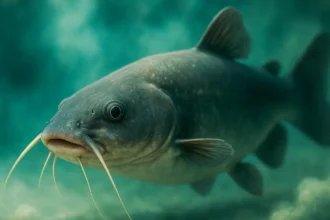



A marlin in a dream can symbolize focused energy, independence, ambition, or a strong drive to move forward. Its open-water habitat and distinctive bill may make the image feel powerful, but the meaning depends on the details you remember.
Consider the marlin’s condition, size, color, movement, and location. Your feelings and actions matter too: watching a fish pass is different from being chased by one or helping it return to the sea.
Dream symbols are personal prompts, not prophecies or fixed meanings. A marlin does not predict success, danger, or a specific event; it may reflect concerns, interests, or emotions that are active for you.
Marlin Dream Examples
- You see a healthy marlin leap through clear water and feel excited. This positive image may connect with confidence, momentum, or a goal that feels within reach.
- You find an injured marlin struggling in a small pool and feel worried. The contrast between the fish and its setting may point to energy or ability that feels constrained.
- A marlin swims below you in deep, dark water, but you cannot tell whether it is approaching or leaving. This ambiguous encounter may reflect uncertainty about a powerful situation or personal impulse.
- You and another person watch a marlin from a boat and quietly agree to let it pass. The shared response may bring attention to cooperation, boundaries, or different views about taking action.
- You spot a marlin in an aquarium or a shallow harbor rather than the open sea. The unusual setting may suggest that something normally associated with freedom or scale feels out of place in your current circumstances.
- You try to follow, catch, or guide a fast-moving marlin. The action may reflect how you approach an urgent goal, a challenge, or an opportunity that is difficult to control.
Marlin Dream Meaning: Good or Bad?
The fish’s condition can shape the tone. A strong, freely swimming marlin may feel energizing, while an injured or trapped one may make you notice limits, worry, or a mismatch between ability and circumstances. Neither image proves that something good or bad will happen.
Your agency is another useful cue. Choosing to observe, approach, escape, or help can show how you experience a challenge in the dream. If you cannot act, that may reflect uncertainty or simply be part of the dream’s scene.
Other people can change the meaning too. A companion’s presence may make the dream about shared decisions or social expectations, while a solitary encounter may feel more private. Overall, a marlin dream is neither inherently good nor bad; its meaning depends on its condition, your actions, and the surrounding context.
Positive Interpretation
In the first example, the healthy marlin leaps through clear water and you feel excited. Because the fish appears capable and unrestrained, the scene may mirror a sense of personal momentum. It could be useful to ask whether a current goal feels challenging in a motivating way.
In the fourth example, you and another person agree to let the marlin pass. That choice may suggest respect for boundaries or an ability to cooperate without taking control. If the calm agreement stood out, the dream may reflect a social situation where listening matters as much as acting.
In the sixth example, you try to guide the moving marlin rather than simply watching it. If your effort feels purposeful rather than frantic, the scene may connect with persistence and adaptable problem-solving. The fish’s speed makes the outcome uncertain, so the emphasis may be on your approach, not on whether you succeed.
In the third example, the marlin is distant and hard to read, yet you remain curious rather than afraid. That combination may represent openness to an unresolved question. Since the fish does not clearly approach or retreat, the dream can leave room for careful observation before you decide what a real-life situation means.
Negative Interpretation
In the second example, an injured marlin is confined to a small pool. The mismatch between a large, active fish and a restricted space may echo a feeling that your energy or options are limited. This is only one possible association: a recent aquarium visit or concern about wildlife could also explain the image.
In the fifth example, the marlin appears in a harbor or aquarium rather than open water. If the setting feels uncomfortable, the dream may bring up a sense of being misplaced or having too little room to act. A strange setting alone is weak evidence, however; it may simply be a surprising dream detail.
In the sixth example, trying to catch the fast fish may turn stressful if it repeatedly escapes or pulls you along. That sequence could reflect pressure to control a goal that is moving faster than you can manage. It does not establish that you are failing or that a real opportunity will be lost.
In the first example, even a healthy marlin might feel threatening if it leaps close to you or blocks your way. In that case, its force may register as pressure rather than confidence. The emotional tone is important, but a single frightening image cannot diagnose a problem or prove that you face a threat.
Different Cultures, Different Meanings
There is no single stable cultural tradition that gives every marlin dream one agreed meaning. Treat this as a set of modern symbolic and context notes, not as a summary of folklore. Your own associations and the details of the dream matter more than a universal cultural rule.
In a marine-life context, a marlin may bring to mind speed, open water, or a large wild fish. These associations come from the kind of animal it is, not from a fixed dream code. If fishing, boating, or ocean life is part of your experience, that personal background may be especially relevant.
In a personal or family context, a marlin may connect with a place, trip, hobby, image, or conversation you already associate with it. The same symbol can feel impressive, ordinary, or unsettling to different people, so avoid assuming that a meaning from someone else’s tradition applies to you.
Psychological Perspectives
A symbolic or psychodynamic reading treats the marlin as an image that may stand for qualities or tensions you associate with it, such as drive, independence, or difficulty being contained. This is a way to explore personal meaning, not evidence that one hidden interpretation is correct. Notice which quality comes to mind first and why.
From a cognitive and emotional-processing perspective, dreams can draw on memories, recent experiences, concerns, and striking images. A marlin may appear because you recently saw one, heard about fishing, or encountered an image of open water. The dream can also combine those memories with current feelings without communicating a literal message.
The continuity hypothesis suggests that some dream content reflects waking interests and concerns, while threat-simulation approaches examine how dreams may stage challenging or threatening situations. These are perspectives used in dream research, not guarantees about any one dream. A marlin chase might resemble pressure or pursuit, but the dream alone cannot establish what caused it or what will happen next.
Marlin Symbol Variations & Context Cues
- Condition: A healthy, injured, dead, or trapped marlin changes the scene’s emotional weight. Compare its condition with how capable or restricted you feel in the dream.
- Color or material: Notice whether its color seems natural, unusually bright, pale, or dark, and whether the marlin is real, carved, painted, or artificial. These details may reflect mood or personal associations, but color has no fixed meaning.
- Number or scale: One marlin may focus attention on a single challenge or quality; several fish may make the scene feel more crowded or expansive. A very large or tiny marlin can change the perceived importance of the encounter.
- Movement or behavior: Leaping, circling, hiding, swimming calmly, or charging creates different interactions. Ask whether the fish’s movement feels directed, unpredictable, graceful, or threatening to you.
- Hidden, found, or lost: Discovering a marlin may make the encounter feel like a new realization, while losing sight of it may leave a question unresolved. These are possible readings, not rules about what you will find or lose in waking life.
- Location or social setting: Open ocean, a boat, a tank, a harbor, or an unexpected indoor space can change the sense of freedom and scale. Note who is present and how their reactions shape your own.
Related Symbols & Common Combinations
- Fish: A broader aquatic symbol that can add themes of emotion, movement, or life beneath the surface; the species and setting help distinguish the dream.
- Ocean: Open water can give a marlin dream a sense of space, depth, uncertainty, or freedom, depending on the conditions and your feelings.
- Boat: A boat can place you in the role of observer, traveler, or participant and may clarify how you relate to the marlin and the surrounding water.
- Shark: A shark is another large sea animal, but its presence often makes threat, pursuit, or fear more central than a marlin does. Your specific dream details still guide interpretation.
What You Should Do If You Dream About Marlin
Start with condition. Write down whether the marlin was healthy, injured, dead, or confined, and note the feeling that followed. Ask what that combination brings to mind for you, without treating it as a verdict about your abilities or circumstances.
Record color and material as you remember them. If the marlin looked unusually bright or appeared as an image, model, or carving, consider whether a recent sight, object, or personal association could explain the detail. Avoid assigning a universal meaning to a color.
Notice number and scale. Was there one fish or a group, and did its size seem ordinary or exaggerated? Those choices may show how large or complicated the scene felt to you, but they do not measure the importance of a real-life event.
Describe your interaction. You might have watched, followed, caught, avoided, or helped the marlin. Consider what your choice felt like and whether you had room to change it. This can help you reflect on your approach to a current decision without turning the dream into an instruction.
Finally, note the location and social context. Record whether you were on open water, in a harbor, or somewhere unexpected, and who else was there. If the dream repeats, compare these details across occasions and look for changing feelings or circumstances rather than assuming it predicts an outcome.
Marlin Vs Similar Dreams
| Aspect | Marlin | Swordfish | Sailfish | Shark |
|---|---|---|---|---|
| Occasion/Age or Context | Often appears in ocean, fishing, or open-water scenes; personal exposure matters. | May appear in marine settings or through recent images and associations. | May evoke open water, a distinctive sail-like fin, or memories of marine life. | Can arise from sea-related memories, media, or a dream’s threat-focused scene. |
| Core Theme | Possible focus on drive, speed, independence, or a challenge that is hard to control. | May emphasize a sharp profile, force, or personal associations with the fish. | May bring attention to display, movement, or visibility in the scene. | May make pursuit, danger, or fear more central, depending on the dream. |
| Typical Emotions | Excitement, awe, uncertainty, or pressure. | Curiosity, caution, or other feelings shaped by context. | Wonder, interest, or unease, depending on its behavior. | Fear or alarm may occur, but calm or neutral encounters are also possible. |
| Common Symbols | Open water, bill, boat, pursuit, or a powerful fish. | Ocean, fishing equipment, or a prominent bill. | Ocean, fin, speed, or a boat. | Water, teeth, pursuit, or a close encounter. |
More in this category: Animals dreams.
Sources & Further Reading
- NINDS Brain Basics: Understanding Sleep Sleep science
- APA Dictionary of Psychology: Dream Analysis Psychology reference
- Dreaming and the Brain: From Phenomenology to Neurophysiology Research
- Sleep and Dreaming Are for Important Matters Research
- Sleep Foundation: Dreams Editorial background
- Sleep Health Foundation: Dreaming Sleep science