


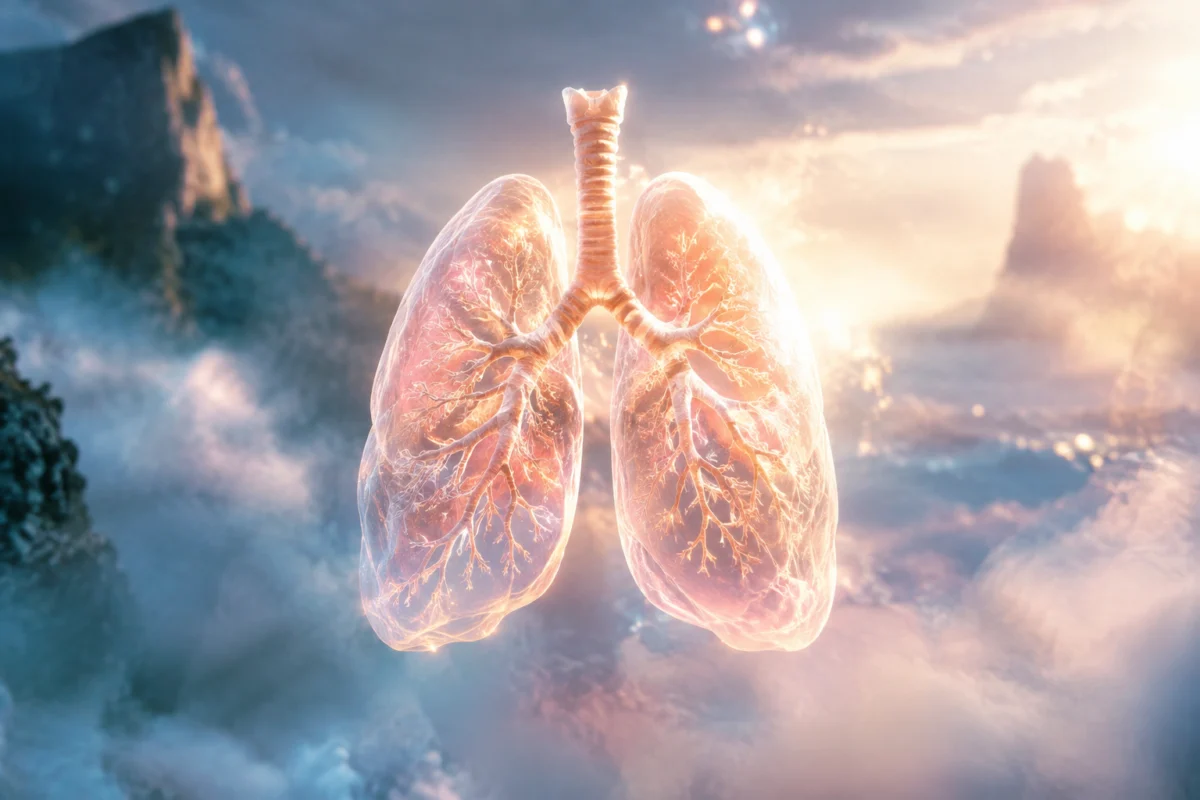
A lung in a dream may symbolize your capacity to breathe, take in experience, and make room for your needs. It can also draw attention to energy, expression, or the pace at which you are handling daily life.
The meaning depends on what happens to the lung and how you respond. A healthy lung, a damaged one, or a lung you cannot find can suggest very different concerns.
This symbol is not a medical diagnosis, prophecy, or fixed message. Your memories, feelings, and the dream’s details matter more than any single definition.
Lung Dream Examples
- You see a healthy lung glowing softly and feel calm. This positive image may connect with a sense of capacity, steadiness, or renewed room to act.
- You notice a lung that is dark, injured, or difficult to breathe around, and you feel alarmed. The scene may reflect pressure or a worry that something is restricting you, but it does not prove that a health problem exists.
- You find a lung in a glass container but cannot tell whether it is real or artificial. This ambiguous image may point to curiosity about your own needs, or to a feeling that an important part of life is being observed from a distance.
- You and someone close to you examine a lung together. The shared activity may reflect a conversation about support, vulnerability, or how much space each person has in the relationship.
- You see a lung displayed in a classroom, clinic, or museum. The setting can make the dream more about learning, scrutiny, or practical concerns than about an intimate emotional message.
- You try to protect, clean, or repair a lung. This action may suggest that you are attempting to preserve your energy, restore a sense of ease, or respond actively to a difficult situation.
Lung Dream Meaning: Good or Bad?
The lung’s condition offers one useful cue. A strong, clear, or functioning lung may fit a feeling of capacity or relief, while damage or blockage may mirror strain. These are possible associations, not rules.
Your agency matters too. If you can care for the lung or make a choice, the dream may emphasize your response to pressure. If you are only watching, it may reflect uncertainty or a sense of distance.
People and places can shift the meaning toward shared concerns, learning, or privacy. A lung dream is not automatically good or bad; its meaning depends on its condition, your feelings, and what you do in the scene.
Positive Interpretation
In the first example, the calm feeling and healthy, glowing lung work together. Because the image appears sound and you are not struggling, it may reflect a sense that you have enough capacity for what is in front of you. The glow is part of this particular dream, not a universal sign.
In the third example, curiosity about the lung may make an uncertain scene useful rather than frightening. Looking at it from a distance can give you room to notice a need before deciding what it means. The uncertainty itself may be an invitation to stay open, not a warning.
In the fourth example, examining the lung with someone can suggest willingness to discuss a sensitive issue. If the exchange feels respectful, the dream may connect vulnerability with cooperation: noticing a need together can make it easier to consider what support would be welcome.
In the sixth example, taking care of the lung gives you an active role. If your efforts feel effective, the action may echo practical steps you are taking to protect time, attention, or energy. The dream can reflect a sense of participation without promising a particular result.
Negative Interpretation
In the second example, an injured or dark lung paired with alarm may mirror a feeling of pressure, limited room, or concern about your ability to keep up. The image does not establish that you have a physical condition. The dream alone is weak evidence about health, and its emotional tone may be more informative than its appearance.
In the third example, a lung isolated in a container could feel cold or unsettling. If that is how you experienced it, the scene may reflect distance from your own needs or discomfort with being evaluated. If you felt interested rather than distressed, that interpretation may not fit.
In the fifth example, a lung on display may feel exposing, especially if other people are watching or judging. This can point to concern about privacy or scrutiny in a setting where you are learning or being assessed. A classroom or clinic does not by itself indicate a personal crisis.
In the fourth example, examining the lung together could also feel tense if the other person takes control or ignores your wishes. In that case, the dream may echo a concern about boundaries or unequal attention. Without a clear feeling or interaction to support that reading, avoid treating it as evidence about the relationship.
Different Cultures, Different Meanings
There is no single stable cultural meaning for a lung dream that applies to everyone. Treat this section as modern symbolic and context notes, not as a claim about folklore or a universal tradition.
In an everyday context, the lung’s role in breathing may make it a personal image of space, effort, or taking in experience. This is a simple association, not a fixed symbolic system; your own memories and feelings matter more.
If you encounter lungs in a learning or clinical setting in waking life, that experience may shape a dream about them. The symbol could reflect recent exposure or practical curiosity, rather than a deeper message.
Psychological Perspectives
A symbolic or psychodynamic reading treats the lung as an image to explore, not as a code with one answer. You might ask what breathing room, dependence, privacy, or vulnerability means to you. A Jungian reading could consider the dream’s personal imagery, but the interpretation should still come from your associations rather than a universal rule.
From a cognitive and emotional-processing perspective, dreams can combine recent experiences, memories, and feelings. A lung may appear because you recently saw medical imagery, heard someone discuss breathing, or were thinking about pressure. Those possibilities do not require the image to carry a hidden message.
The continuity hypothesis proposes that some dream content reflects concerns or experiences from waking life. Threat-simulation approaches, associated with researchers such as Revonsuo, examine how dreams may portray threatening situations. These are theoretical lenses, not ways to diagnose a dreamer; a damaged lung in a dream does not prove that you feel threatened or predict harm.
Lung Symbol Variations & Context Cues
- Condition: A healthy, damaged, blocked, or repaired lung changes the scene’s emphasis. Notice whether its condition affects how you feel or act.
- Color or material: A natural-looking lung, a dark one, or a model made of glass or plastic may carry different personal associations. Ask what that specific look reminds you of instead of assigning it a fixed meaning.
- Number or scale: One lung, two lungs, or an unusually large or small lung may make the image feel ordinary, incomplete, or exaggerated. Consider what the number or scale means within the dream.
- Movement or behavior: A lung that expands, shrinks, pulses, or stays still can shift attention toward activity, change, or observation. Note whether you cause the movement or only witness it.
- Hidden, found, or lost: Finding a lung may bring discovery into focus; hiding or losing it may add uncertainty or privacy concerns. Your feeling during the event helps distinguish these possibilities.
- Location or social setting: A lung at home, in public, or in a classroom may connect the image with different parts of your life. Notice who is present and whether you feel supported, watched, or alone.
Related Symbols & Common Combinations
- Breath: May add a focus on rhythm, ease, or effort to a lung dream, depending on how breathing feels in the scene.
- Chest: Can connect the lung image with a wider sense of protection, pressure, or personal space.
- Heart: May bring attention to emotion or connection when it appears beside a lung, though the two symbols do not have one required meaning.
- Hospital: Can place the dream in a setting of observation, learning, or concern. The scene alone is not evidence of a health problem.
What You Should Do If You Dream About Lung
Start with the lung’s condition. Write down whether it looked healthy, damaged, blocked, or altered, then note the feeling that accompanied it. Treat the details as clues to your experience, not as a health assessment.
Consider its color and material. A realistic organ may connect with something you have recently seen, while a glass or artificial lung may feel distant or unfamiliar. Your own reaction is more useful than a standard color meaning.
Notice the number and scale. Ask whether the dream showed one lung, more than one, or an unusually large or small one. Consider whether that feature made you feel curious, concerned, or simply aware of its size.
Recall how you interacted with it and with anyone else. Caring for the lung, avoiding it, or discussing it with another person may bring different concerns into view. Focus on what you chose and how others responded, rather than assuming the scene predicts what they will do.
Record the location and social context. A private room, a public display, and a learning environment can suggest different waking-life associations. You can compare the dream with recent experiences, while leaving room for it to have no single clear meaning.
Lung Vs Similar Dreams
| Aspect | Lung | Breath | Heart | Chest |
|---|---|---|---|---|
| Occasion/Age or Context | May appear during reflection on capacity, pressure, or a recent encounter with organ imagery. | May feature when breathing or breath is especially noticeable in the dream. | May appear in dreams focused on emotion, connection, or bodily imagery. | May appear when the scene emphasizes space, protection, or pressure. |
| Core Theme | Taking in experience, capacity, or room to act. | Rhythm, effort, or ease, depending on the scene. | Emotional significance or connection, depending on personal associations. | A broader sense of protection, openness, or pressure. |
| Typical Emotions | Calm, concern, curiosity, or uncertainty. | Relief, urgency, or awareness. | Warmth, worry, or intensity. | Comfort, vulnerability, or constriction. |
| Common Symbols | Organ, glass display, repair, or clinic. | Air, wind, rhythm, or effort. | Pulse, touch, or an organ shown directly. | Clothing, enclosure, posture, or pressure. |
More in this category: Body parts dreams.
Sources & Further Reading
- NINDS Brain Basics: Understanding Sleep Sleep science
- APA Dictionary of Psychology: Dream Analysis Psychology reference
- Dreaming and the Brain: From Phenomenology to Neurophysiology Research
- Sleep and Dreaming Are for Important Matters Research
- Sleep Foundation: Dreams Editorial background
- Sleep Health Foundation: Dreaming Sleep science