

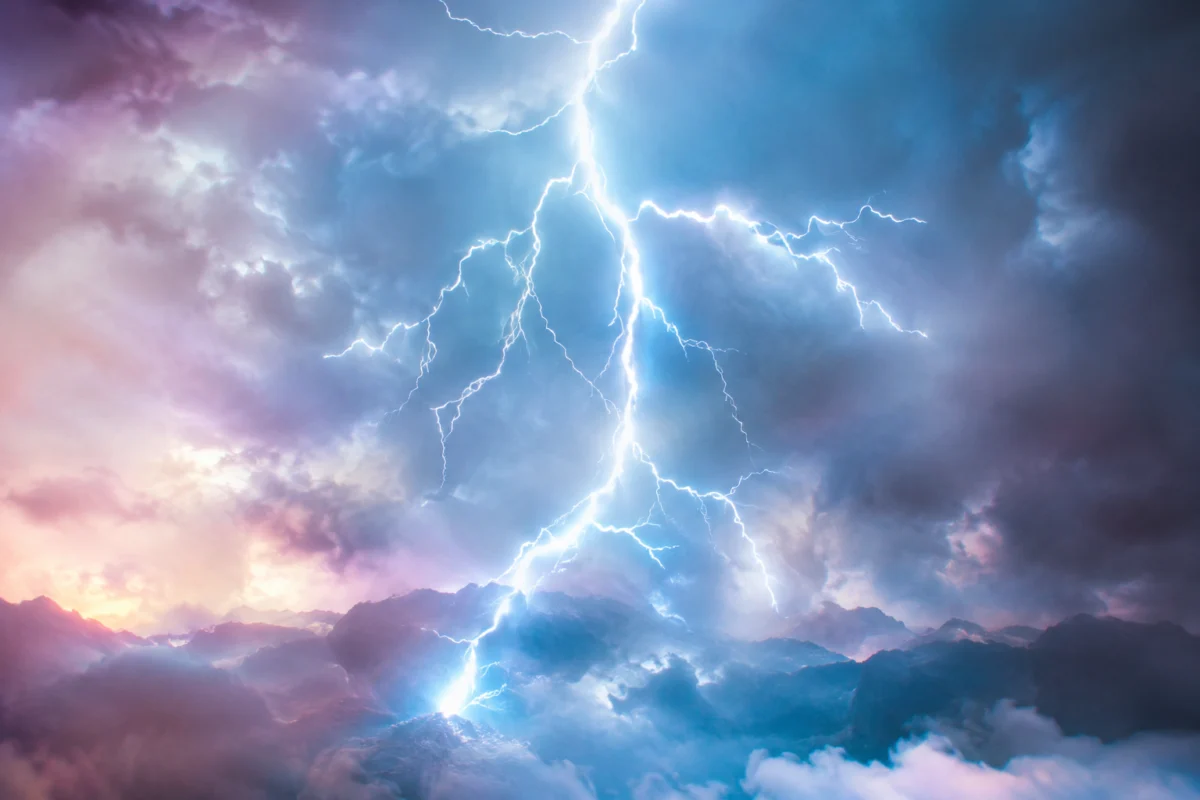
Lightning in a dream can symbolize a sudden realization, a sharp change in attention, or intense emotion. Its brief, bright appearance may make something feel urgent or newly visible.
- Lightning Dream Examples
- Lightning Dream Meaning: Good or Bad?
- Different Cultures, Different Meanings
- Psychological Perspectives
- Lightning Symbol Variations & Context Cues
- Related Symbols & Common Combinations
- What You Should Do If You Dream About Lightning
- Lightning Vs Similar Dreams
- See Also
- Sources & Further Reading
- FAQ
What it means depends on the details: whether it strikes, illuminates, or stays far away; where you see it; and what you do next. Your personal associations with storms and electricity also matter.
Lightning is a reusable dream symbol, not a prediction, diagnosis, or fixed sign of good or bad events. Consider it alongside the rest of the dream and what is happening in your waking life.
Lightning Dream Examples
- You watch a bolt light a dark path without causing damage, and feel relieved. This may connect to finding direction or noticing an option that was hard to see.
- Lightning hits a tree beside your home and starts a fire. The image may reflect fear of disruption or concern that a problem could reach a place you consider secure.
- A bright flash appears in a clear sky, but there is no thunder and you feel uncertain. The contrast may suggest surprise, an unexplained impression, or a change whose meaning is not yet clear.
- You and another person see lightning strike nearby, then look to each other for a reaction. The shared moment may draw attention to how you handle uncertainty together.
- Lightning repeatedly illuminates an empty city street while you watch from a window. The setting may connect sudden awareness with distance, privacy, or a situation you are observing rather than entering.
- You reach toward a flash or try to capture it with a camera, but it disappears. Your action may reflect an effort to understand, hold on to, or communicate a brief idea or feeling.
Lightning Dream Meaning: Good or Bad?
The condition of the lightning matters. A distant flash or one that reveals a safe route can feel different from a strike that damages a building. The dream’s consequences and your emotional response offer more useful clues than the symbol alone.
Your agency also shapes the reading. Watching from a safe place, seeking shelter, helping someone, or moving toward the flash each gives you a different role. These actions may point to how you are approaching a sudden or intense situation.
Social context matters too. A shared flash may bring attention to communication or a common concern, while an isolated scene may feel more private. A lightning dream is not inherently good or bad; its meaning depends on the details and your associations.
Positive Interpretation
In the first example, lightning lights a dark path without causing harm. Because the flash makes the route visible, it may represent a useful realization or a clearer sense of what you can do next. The dream does not guarantee an easy outcome; it highlights the experience of seeing an option.
In the third example, a flash in a clear sky has no obvious explanation. If you feel curious rather than frightened, the unexpected image may stand for openness to a new thought. The lack of thunder or damage can make the moment feel like a prompt to notice something, not a warning.
In the fourth example, two people share the experience and look to each other. If the exchange feels steady or supportive, the sudden event may emphasize cooperation. The sequence matters: noticing the other person’s response could show that connection helps you make sense of uncertainty.
In the sixth example, you try to photograph the flash. If your effort feels engaged rather than panicked, it may reflect curiosity or a wish to preserve a fleeting insight. The flash vanishes because lightning is brief, so the dream may draw attention to how quickly a thought or opportunity can pass from view.
Negative Interpretation
In the second example, a strike starts a fire near home. If the dream leaves you alarmed, it may express concern about disruption close to something that feels important or familiar. A single dream image is not evidence that your home or relationships are actually at risk.
The fifth example places you behind a window, watching flashes over an empty street. If this feels lonely or tense, the distance may reflect feeling like an observer in a situation rather than a participant. The setting alone is weak evidence, however; a quiet street may simply be a striking scene your mind used.
The sixth example can feel frustrating if the camera misses the flash. That frustration may connect to difficulty explaining a brief experience or wanting more control over an uncertain moment. If you felt calm while trying, the same action could instead show interest, so your emotion is important.
Even a forceful strike can have an ambiguous meaning. If you cannot remember what was hit, how close it was, or whether anyone was harmed, avoid treating the image as proof of a specific conflict or danger. The dream may express intensity without identifying its source.
Different Cultures, Different Meanings
There is no single cultural meaning that can be applied to every lightning dream. Religious, historical, and local interpretations vary, and a person’s own background and associations may matter more than a general symbol list.
Modern symbolic note: In everyday interpretation, lightning can suggest sudden visibility, intensity, or disruption because it appears quickly and changes how a scene looks. This is a flexible metaphor, not a universal belief.
Weather and personal experience: If you recently watched a storm, heard thunder, or felt concerned about severe weather, that experience may shape the dream. A familiar sensory memory can be more relevant than an abstract cultural reading.
Creative context: In stories and visual media, lightning is sometimes used to mark a dramatic reveal or abrupt change. If that association is familiar to you, it may influence the dream, but it does not establish a fixed meaning.
Psychological Perspectives
A symbolic or psychodynamic reading treats lightning as an image to explore, not a code with one correct answer. You might ask what felt suddenly visible, intense, or difficult to contain. A Jungian reading could consider the image’s personal associations, but no archetypal explanation should override the dream’s specific details.
From a cognitive and emotional-processing perspective, a vivid flash may bring attention to feelings or concerns that have been active during the day. The dream could combine recent impressions with emotional themes. This possibility does not mean that every bolt represents a hidden message or unresolved problem.
The continuity hypothesis proposes that some dream content can reflect waking concerns and experiences. Threat-simulation theory is another proposed account that considers how dreams may represent threatening situations. These are frameworks for thinking about dream content, not proof that a lightning dream predicts danger or serves the same purpose for everyone.
Lightning Symbol Variations & Context Cues
- Condition: A distant, faint flash may feel less immediate than a bolt that strikes nearby. Note whether the lightning causes damage, reveals a route, or passes without effect.
- Color or material: White or blue light may feel sharp or cold to you, while a golden glow may feel warmer. If lightning appears to be made of something unusual, such as glass or fire, consider your personal association rather than assuming a standard meaning.
- Number and scale: One small flash can focus attention on a brief moment. Many bolts or an unusually large strike can make the scene feel more intense or overwhelming, depending on your reaction.
- Movement or behavior: Lightning that branches, follows you, or repeatedly strikes creates a different experience from a bolt that stays far away. Track whether you feel pursued, startled, curious, or simply observant.
- Hidden, found, or lost: Lightning is usually visible, but you may hear thunder without seeing a flash, search for its source, or lose sight of it. These changes can highlight uncertainty about what caused a sudden feeling or event.
- Location and social setting: A strike over a home, road, workplace, or open field gives the image a different personal setting. Notice who is present, where you stand, and whether you feel sheltered, exposed, or connected to others.
Related Symbols & Common Combinations
- Thunder: Adds sound and physical impact to a storm scene, which may make the dream feel more immediate or emotionally intense.
- Storm: Places lightning within a wider period of changing weather, wind, or rain and may shift attention from one sudden flash to the whole atmosphere.
- Fire: May appear after a lightning strike and bring the dream’s focus to consequences, heat, damage, or transformation, depending on what happens.
- Electricity: Connects lightning with power, current, or contact. Consider whether the dream emphasizes energy, risk, or a device that is working or failing.
What You Should Do If You Dream About Lightning
Start with the condition of the lightning. Was it distant or close, brief or repeated, harmless or destructive? Record what it changed in the scene. Those concrete details can keep your interpretation grounded rather than turning one image into a broad conclusion.
Next, note the color or material, if you remember it. Describe the actual appearance before deciding what it means to you. A bright white flash may feel different from an unusual colored bolt, but personal associations are more useful than fixed color rules.
Consider the number and scale. Ask whether one small flash or many large bolts shaped the mood, and whether the scene felt manageable or overwhelming. Compare that feeling with a current situation only if a clear connection comes to mind.
Review your interaction with the lightning and other people. Did you watch, run, take shelter, reach toward it, or help someone? Did anyone react with you? These actions can suggest how you see your own choices or shared responses, without proving what another person thinks.
Finally, place the dream in its location and social context. A storm over a familiar home may connect to personal associations with that place, while a public street may bring different concerns to mind. Write down what the setting means to you and leave the interpretation open if no connection feels convincing.
Lightning Vs Similar Dreams
| Aspect | Lightning | Thunder | Fire | Storm |
|---|---|---|---|---|
| Occasion/Age or Context | A sudden flash within a storm or unexpected scene | A rumble or crash, sometimes without a visible bolt | A flame or burning event, with or without a storm | A broader weather scene involving changing conditions |
| Core Theme | Brief visibility, intensity, or abrupt change | Sound, impact, or an approaching presence | Heat, damage, energy, or change through burning | Atmosphere, disruption, and conditions affecting a larger area |
| Typical Emotions | Surprise, alertness, awe, or fear | Startle, tension, or anticipation | Alarm, urgency, fascination, or warmth | Unease, anticipation, relief, or overwhelm |
| Common Symbols | Flash, branching bolt, strike, illuminated landscape | Rumble, vibration, loud crash, distant sound | Flame, smoke, ash, burning object | Wind, rain, dark clouds, lightning, thunder |
More in this category: Force of Nature dreams.
Sources & Further Reading
- NINDS Brain Basics: Understanding Sleep Sleep science
- APA Dictionary of Psychology: Dream Analysis Psychology reference
- Dreaming and the Brain: From Phenomenology to Neurophysiology Research
- Sleep and Dreaming Are for Important Matters Research
- Sleep Foundation: Dreams Editorial background
- Sleep Health Foundation: Dreaming Sleep science