

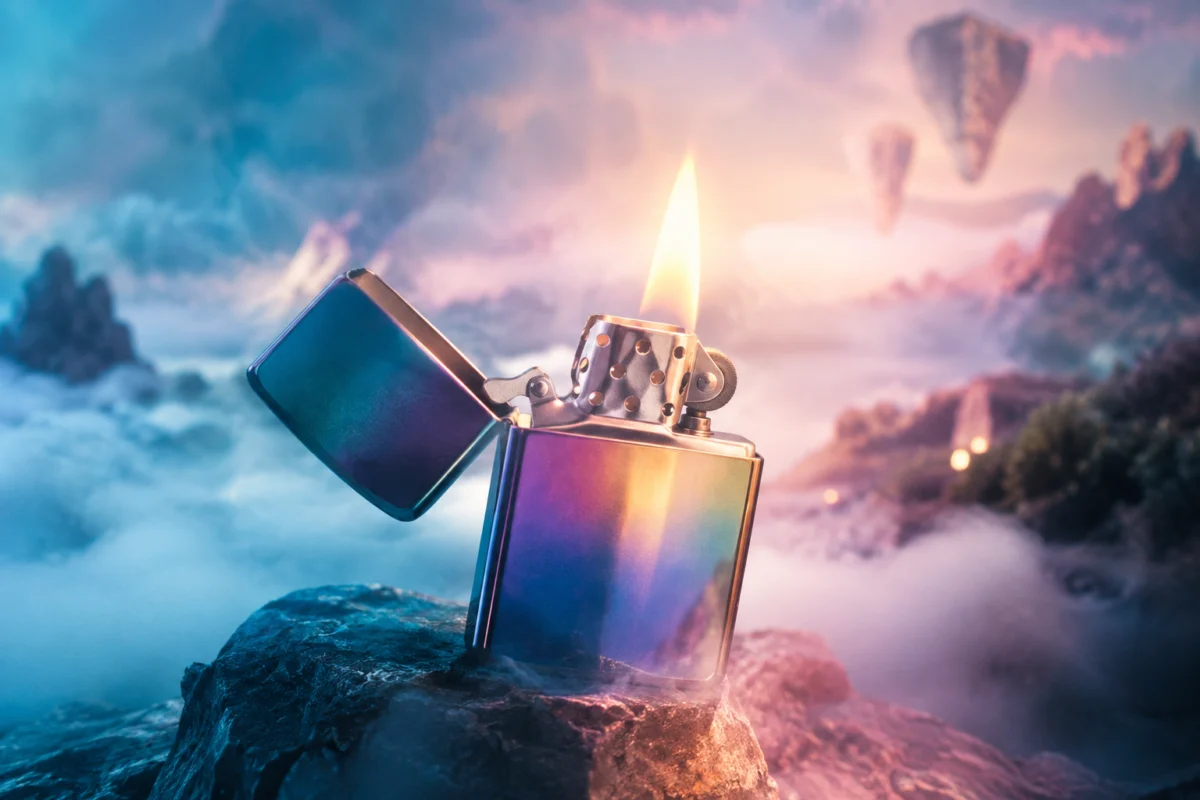
A lighter in a dream may symbolize a small, portable source of energy, attention, or agency. Because it creates a flame through a deliberate action, it can point to something you are trying to start, reveal, or control.
The meaning depends on details such as whether the lighter works, what the flame touches, and how you feel while using it. A steady flame may feel reassuring, while a failure to ignite may reflect frustration or uncertainty.
A lighter is not a prediction or a fixed message about your future. Treat it as a symbolic cue, and consider how the dream connects with your current concerns and personal associations.
Lighter Dream Examples
- You use a reliable lighter to light a candle, and the small flame stays steady. The scene feels calm and encouraging.
- You keep clicking a lighter that will not ignite while you feel increasingly frustrated. Nothing around you catches fire.
- You find an unfamiliar lighter with an almost empty fuel chamber. You are unsure whether to keep it or leave it behind.
- A friend asks you to light something for them, and you hesitate before handing over your lighter.
- You use a lighter in a dark hallway to see the next few steps, but the flame only gives you a limited view.
- You deliberately spark a lighter, watch the flame appear, and then close it yourself before it spreads.
Lighter Dream Meaning: Good or Bad?
The condition of the lighter can shape the tone. A clean, working lighter may suggest that you feel able to begin or manage something, while a damaged or empty one can reflect a sense of limited resources. Neither condition has a universal meaning.
Your agency matters too. Choosing when to ignite and extinguish the flame may feel different from struggling to light it or watching someone else use it. Notice whether your actions seem deliberate, pressured, or outside your control.
Relationships and social settings add another layer. Sharing a lighter may involve trust, cooperation, or responsibility, depending on your feelings in the dream. A lighter dream is not inherently good or bad; its meaning depends on its condition, your choices, and the scene around it.
Positive Interpretation
In the first example, the lighter works and helps you light a candle. Because your small action produces a steady result, the scene may reflect confidence in a manageable first step. The candle’s continuing flame can make the moment feel more about sustaining attention than making a dramatic change.
In the fifth example, you use the flame to see a few steps in a dark hallway. Because you take an action that improves your immediate view, the dream may suggest practical resourcefulness. The limited light also matters: you may feel ready to move carefully without knowing everything that lies ahead.
In the sixth example, you create a flame and close the lighter before it spreads. Because you both initiate and stop the action, the dream may reflect a sense of control over your effort or attention. It does not prove that a real-life situation is fully under control, but the dream’s sequence gives agency a central role.
In the fourth example, you pause before giving your lighter to a friend. If the hesitation feels thoughtful rather than fearful, the scene may represent measured cooperation. Your ability to decide whether and how to share a useful resource can make the interaction feel balanced.
Negative Interpretation
In the second example, repeated clicks do not produce a flame. Because effort fails to lead to the result you want, the dream may echo frustration, delay, or doubt about your available options. If you felt calm despite the failure, the symbol may be less troubling than the action alone suggests.
In the third example, the lighter has little fuel and you do not know what to do with it. That combination may reflect uncertainty about whether a resource, plan, or opportunity is still useful. The dream does not establish that something in your waking life is actually running out; your personal associations and recent events matter more.
In the fourth example, the request from your friend may feel pressuring rather than cooperative. If you hand over the lighter unwillingly, the scene can highlight discomfort around responsibility or boundaries. A single dream interaction is weak evidence for drawing conclusions about the real relationship.
In the fifth example, the flame gives only a narrow view of a dark hallway. If you feel trapped or unsafe, the scene may express uncertainty about what comes next. That feeling is not proof that danger is approaching, and a dark setting by itself does not establish a specific problem.
Different Cultures, Different Meanings
There is no single stable cultural tradition that gives a lighter one universal dream meaning. The following are modern symbolic and context notes, not claims about folklore.
Everyday use: In a personal dream, a lighter may draw on your experience of using or seeing one. If you associate it with convenience, smoking, cooking, candles, or an unpleasant memory, that association may matter more than a general symbol definition.
Fire and practical safety: In everyday contexts, a lighter is a tool that produces fire and requires handling. A dream focused on careful use may therefore bring attention to control, responsibility, or caution, but the setting and your feelings determine whether those ideas fit.
Personal and social context: A lighter can be private property or something shared between people. Consider who owns it and what it is used for in the dream. There is no need to apply a religious, cultural, or family interpretation unless that connection is genuinely part of your own experience.
Psychological Perspectives
A symbolic or psychodynamic reading treats the lighter as an image to explore rather than a code with one answer. Its ability to make a flame might represent a beginning, a brief burst of attention, or an attempt to bring something into view. In this approach, your own associations and the dream’s details matter more than a fixed interpretation.
From a cognitive and emotional-processing perspective, dream images may combine recent experiences, familiar objects, and current feelings. A lighter that works or fails could reflect the emotional tone of trying, waiting, or managing a task. This is a way to consider the dream, not a diagnosis or proof of a particular mental state.
Continuity-hypothesis accounts consider how dreams may draw on waking concerns, while threat-simulation approaches examine scenes that involve danger or preparation. A flame in a dark place could be connected with navigating uncertainty, especially if that resembles something on your mind. These perspectives are possible lenses, not conclusions that can be drawn from one symbol alone.
Lighter Symbol Variations & Context Cues
- Condition: A full, clean, reliable lighter may suggest ready access to an action or resource. An empty, broken, or jammed one may bring up limits or frustration, depending on your response.
- Color and material: Notice whether the lighter is familiar, bright, plain, metal, or plastic. Color and material do not have fixed meanings; personal associations and the object’s role in the scene are more useful clues.
- Number and scale: One lighter can focus attention on a single tool or choice. Several lighters, or an unusually large one, may make availability, excess, or importance more noticeable.
- Movement and behavior: A steady flame, repeated clicking, accidental ignition, or a flame that goes out each creates a different sequence. Consider what you intended and what happened as a result.
- Hidden, found, or lost: Finding a lighter may raise questions about a newly noticed resource, while losing or hiding one may emphasize access, privacy, or uncertainty. Your feelings help distinguish these possibilities.
- Location and social setting: A lighter used outdoors, at home, in a hallway, or among other people takes meaning from its surroundings. Who is present and what the flame is for can change the emphasis.
Related Symbols & Common Combinations
- Fire: Adds the result and potential consequences of the lighter’s flame, from warmth and visibility to concern about spread.
- Match: Shares the act of making a small flame, but may emphasize a brief, one-use resource rather than a reusable tool.
- Candle: Often pairs with a lighter when a dream focuses on starting or maintaining a steady, contained flame.
- Flashlight: Provides light without a flame, making it a useful comparison when the dream centers on finding your way or seeing what is nearby.
What You Should Do If You Dream About Lighter
Start with the lighter’s condition. Ask whether it worked, ran out, or seemed damaged, and connect that detail to how prepared or limited you felt in the dream. Avoid treating the object as evidence that a real-life resource is actually failing.
Recall its color and material, but use your own associations rather than a universal color code. A familiar lighter may connect with a specific person or routine, while an unfamiliar one may simply make the dream feel less predictable.
Consider the number and scale. One small lighter can make a single action the focus; several or an oversized lighter may make supply or importance more noticeable. These details can help you describe the dream without assuming they carry a fixed message.
Review your interaction with it. Did you ignite it, share it, avoid using it, or extinguish it? The sequence can show whether the dream emphasizes initiative, hesitation, cooperation, or control.
Finally, note where you were and who else was present. A lighter in a dark hallway may feel different from one used with friends in a familiar place. Write down the setting and your strongest emotion, then ask whether either resembles a current concern. Keep the connection tentative and personal.
Lighter Vs Similar Dreams
| Aspect | Lighter | Similar 1 | Similar 2 | Similar 3 |
|---|---|---|---|---|
| Occasion/Age or Context | A portable tool used to make a flame | Match: a small, typically brief flame source | Candle: a contained flame that may continue burning | Flashlight: a portable light with no flame |
| Core Theme | Starting, controlling, or sharing a flame | Creating a quick spark or beginning | Maintaining light or attention | Seeing or navigating in darkness |
| Typical Emotions | Agency, hesitation, frustration, or caution | Anticipation or concern about running out | Calm, focus, or vulnerability | Relief, curiosity, or uncertainty |
| Common Symbols | Flame, fuel, clicking, ignition | Striking surface, spark, matchbox | Wick, wax, steady flame | Beam, battery, dark path |
More in this category: Items dreams.
Sources & Further Reading
- NINDS Brain Basics: Understanding Sleep Sleep science
- APA Dictionary of Psychology: Dream Analysis Psychology reference
- Dreaming and the Brain: From Phenomenology to Neurophysiology Research
- Sleep and Dreaming Are for Important Matters Research
- Sleep Foundation: Dreams Editorial background
- Sleep Health Foundation: Dreaming Sleep science